
Top 10 Facts About the Triceratops
Have you ever dreamed of travelling back 66 million years to a world where giants ruled the Earth? While we don’t have a time machine (yet!), we have something even better: fossils. These ancient treasures are like clues left behind by the dinosaurs themselves, and no dinosaur left more impressive clues than the legendary Triceratops.
With its massive three-horned face and giant shield-like frill, the Triceratops is one of the most famous creatures to ever walk the planet. But did you know its skull alone could weigh as much as a small car, or that it had hundreds of teeth?
Whether you’re a budding palaeontologist or you’re just starting your very first fossil collection, getting to know this “three-horned face” is the perfect place to start. Join us at Fossils UK as we uncover the top 10 facts about the incredible Triceratops and take part in our quiz to show what you’ve learned!
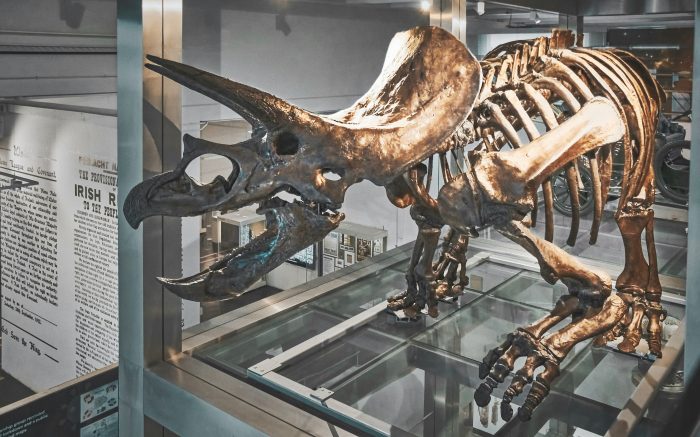
- What did the Triceratops look like?
The Triceratops is one of the most instantly recognisable dinosaurs thanks to its three distinctive horns and beautiful frill. Its horns, two large ones on its head and another smaller horn on its nose, were likely for protection against predators. There are also suggestions that they may have been used to battle against fellow Triceratops during mating season. The large frill on top of the Triceratops’s head was also used to fend off predators, likely acting as a shield to protect its neck and shoulders.
- What did the Triceratops eat?
While a Triceratops may have been on the menu for some carnivorous dinosaurs, the three-horned dinosaur stuck to a plant-based diet and didn’t feed on other creatures. Low-growing plants, including ferns, cycads, and palms, were likely favourites of the Triceratops.
- How big were the Triceratops?
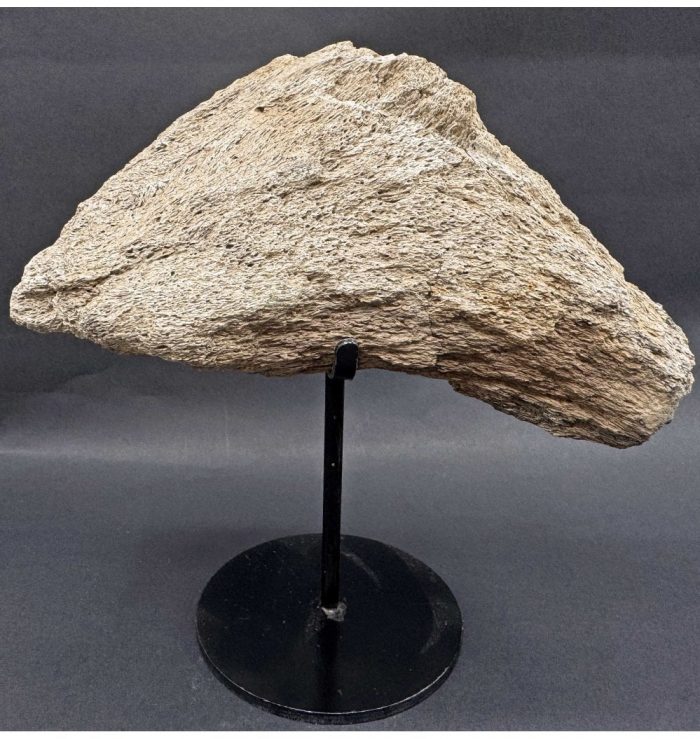
Standing at approximately 6 metres (20 feet) tall and reaching lengths of a staggering 37 metres (121 feet), the Triceratops was one of the largest herbivorous dinosaurs the planet had ever seen. It’s believed that a Triceratops would’ve weighed around the same as an elephant! The weight of its skull alone could be as heavy as a ton.
- When did the Triceratops live?
Triceratops lived until the mass extinction event at the end of the Cretaceous period that wiped out all living dinosaurs approximately 66 million years ago. It’s likely that Triceratops first appeared around 2 million years before the event and was among the very last dinosaurs on Earth before the asteroid hit the planet. Learn more about how the dinosaurs went extinct and the other dinosaurs that lived during the Mesozoic Era in our dedicated guides.
- What did Triceratops use its teeth for?
Triceratops had around 400-800 teeth! An incredible amount, given that this dinosaur didn’t eat meat. Its teeth were still very important, however, as Triceratops used them to slice through plants rather than for chewing. Teeth in the Triceratops’s jaws were constantly growing as new ones quickly took the place of old, worn-out teeth. The rows of teeth towards the back of the mouth were used for breaking down leaves and twigs.
- When was the Triceratops discovered?
During the 1870s and 1880s, the “Bone Wars” were well underway as palaeontologists competed to discover and identify as many dinosaur fossils as possible in a short space of time. In 1887, George Lyman Cannon discovered a skull roof with a pair of horns attached in Denver, Colorado and sent it to Othneil Charles Marsh, a key figure in the field. Marsh initially mistook the horns for a large bison, but later changed his mind after seeing further evidence.
- What does the word Triceratops mean?
As with a lot of dinosaurs, the names are very much “say what you see” once you discover the translations. Triceratops is no different, as its name is taken from the Ancient Greek words “tri-” meaning three, “keras” which means horn, and “ops” which translates to face. So the literal English translation for Triceratops is “three-horned face”.
- Triceratops may have moved in herds
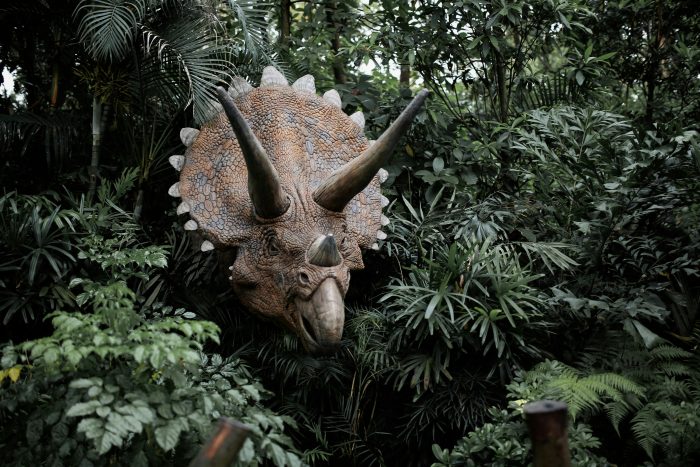
An interesting fact about Triceratops is that there is evidence suggesting they moved in herds. This would’ve likely been to protect each other from predators, using a safety-in-numbers approach to survival. Claims of herd movement in Triceratops are backed up by fossilised remains of multiple Triceratops being found together in clusters.
- Where did the Triceratops live?
During the late Cretaceous, what is now the North American states of Colorado, Montana, and Wyoming were full of plants and rivers. This environment was ideal for Triceratops as they could feed on the vegetation surrounding them and never had to struggle for food.
- Triceratops fossils are incredibly common
It’s reasonable to assume that there were many Triceratops that roamed the Earth during the late Cretaceous period, as so many Triceratops fossils have been discovered in comparison to other dinosaurs from the same period. Research also suggests that the number of teeth Triceratops had, the strong construction of their bones, which allowed them to fossilise well, and their habitat within a popular discovery site contribute to their incredibly high discovery rate. We even have some here at Fossils UK! View our full collection of Triceratops fossils to learn more.
Quiz: How much do you know about Triceratops?
It’s time to put your Triceratops trivia to the test. Take our quiz and show how much you’ve learned!
1. From which language does Triceratops get its name?
2. How many horns does a Triceratops have?
3. During which period did the Triceratops live?
4. What living animal weighs similar to a Triceratops?
5. Where were the first Triceratops fossils found?
Browse fascinating dinosaur fossils at Fossils UK
Congratulations! You’re now a certified Triceratops expert. Celebrate this achievement and expand your knowledge by learning about more dinosaurs at Fossils UK. (Link to other blogs here)A great way to extend your dinosaur learning is to examine fascinating dinosaur fossils up close. At Fossils UK, we stock an amazing collection of triceratops fossils and other dinosaur remains that you can display at home or learn from as a piece of history that has lasted millions of years. Start your collection journey with our dinosaur fossils today!
Comments are closed here.