
How to Spot Fake Moroccan Dinosaur Teeth
Building an authentic fossil collection is one of the most fascinating and rewarding hobbies. Holding a piece of prehistoric life connects you directly to a world from millions of years ago. It offers a tangible glimpse into the ancient ecosystems that once dominated our planet. Moroccan dinosaur teeth make particularly fantastic additions to any collection. The striking appearance and formidable history of these specimens captivate enthusiasts worldwide.
However, the surging popularity of these prehistoric treasures has created an unfortunate side effect. The online market is now saturated with fabricated and heavily altered items. This Fossils UK blog serves as your definitive guide to building a genuinely authentic collection. We will provide actionable steps to help you avoid falling victim to composited items online.
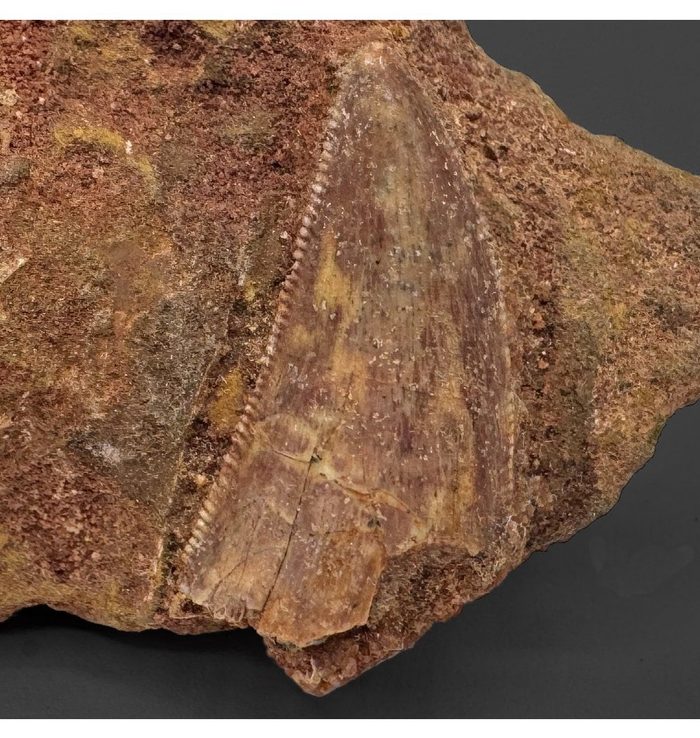
Table of contents
- Why fake dinosaur teeth are on the rise
- How experts verify Moroccan dinosaur teeth
- Can you spot the real Moroccan dinosaur tooth?
- Key signs to look for in fake dinosaur teeth
- Build an authentic dinosaur teeth collection with Fossils UK
Why fake dinosaur teeth are on the rise
To understand the influx of fabricated specimens, we must look at the source. Most Moroccan dinosaur teeth come from the Kem Kem Group. This geological marvel sits along the border of Morocco and Algeria. It is a harsh desert landscape that requires immense dedication to excavate. Local miners spend countless hours digging narrow tunnels into the sandstone to extract prehistoric remains.
Fossilisation is a chaotic process. Teeth are frequently crushed, fragmented or eroded over millions of years. This reality leaves many unearthed fossils looking heavily weathered. When commercial interest demands perfection, unsavoury sellers step in to bridge the gap.
Experts must therefore rely on a rigorous understanding of the natural discovery process to spot these deceptions. Identifying genuine Moroccan dinosaur teeth begins with understanding exactly how they form and what they look like fresh from the earth. Professionals look for very specific natural indicators before a specimen ever reaches the global market. These include:
- Matrix consistency: Observing the natural sandstone or mudstone attached to the fossil. Genuine matrix is heavily compacted and rarely uniform in texture.
- Enamel preservation: Analysing the tooth’s natural shine and surface texture. Authentic enamel displays microscopic cracks and natural wear patterns that are incredibly difficult to replicate.
- Root structure: Examining the tooth’s base. Dinosaur teeth naturally shed their crowns. Finding a perfectly preserved root attached to a pristine crown in the Kem Kem beds is exceedingly rare and instantly prompts further scrutiny.
- Serrated edges: Inspecting the carinae (cutting edges) under field magnification. Natural serrations show irregular wear from feeding, whereas carved fakes often look far too uniform.
How experts verify Moroccan dinosaur teeth
Once specimens leave the harsh conditions of the Moroccan desert, they enter preparation laboratories. Here, experts employ advanced techniques to verify the authenticity of dinosaur teeth. The verification process moves beyond basic visual inspection. It transitions into detailed scientific scrutiny.
Palaeontologists and experienced dealers know modern fabricators use sophisticated resins, crushed bone mixtures, and industrial adhesives to create convincing composites. A composite fossil is made by glueing multiple broken teeth together. Sometimes, a genuine tooth crown is attached to a fabricated root made from plaster and sand. To unmask these sophisticated forgeries, professionals rely on several proven verification methods. They meticulously document every inconsistency.
The table below highlights the key techniques and features that assist experts during this rigorous verification process.
| Verification Technique | Targeted Feature | What it Reveals |
| Ultraviolet (UV) Light Inspection | Glue joints, resin and modern paint | Under a blacklight, modern adhesives and epoxy resins fluoresce brightly. Natural fossilised bone and enamel will not glow. This instantly highlights repairs or composite additions. |
| The Acetone Test | Matrix integrity and artificial sand bases | Applying a small amount of acetone to a suspicious root or matrix dissolves modern glues. If the base of the tooth falls apart into loose sand, the matrix was entirely fabricated. |
| Microscopic Analysis | Enamel transitions and surface texture | High-powered magnification reveals the boundary where fake material meets genuine fossils. Experts look for tiny air bubbles in cast resins that never appear in real stone. |
| Thermal Conductivity | Material density and temperature retention | Genuine fossils are stone. They feel cold to the touch and absorb heat slowly. Resin or plastic casts feel naturally warmer and lighter. |
Can you spot the real Moroccan dinosaur tooth?
It’s easy to say what separates a genuine dinosaur tooth from a fake, but spotting the difference with your own eyes is a different task. Below are clickable images. One is a genuine Moroccan dinosaur tooth sold by Fossils UK; the other is a replica.
Take a close look and see if you can choose the authentic fossil. Remember, there’s no shame in getting this wrong; fake listings are designed to look as close to the real deal as possible.
Click on the image you think is the Genuine Dinosaur Tooth.
Hint: Inspect the surface of the tooth for natural imperfections. Genuine fossils rarely look like they were poured from a mould.
Well done! You correctly identified the Genuine Dinosaur Tooth (Fossil A). A trained eye is crucial when shopping for historical artefacts online.
Here is what makes this fossil authentic:
- Natural Enamel Cracks: Genuine teeth undergo millions of years of geological pressure, resulting in visible hairline fractures and natural wear across the enamel.
- Colour Variation: Notice the distinct mineral staining, gradients, and contrasting colours between the crown and the base. Real fossils absorb the minerals of the earth they are buried in.
- Authentic Serrations: The serrated edges show slight, natural inconsistencies and real feeding wear.
It’s very easy to be fooled by a high-quality cast. You selected the Replica (Fossil B). Replicas are highly detailed moulds of real fossils, but they are made from modern resins or plastics.
How can you spot a replica online?
- Waxy Resin Finish: Casts often have a uniform, glossy, or sometimes waxy sheen that reflects light much like plastic, unlike natural fossilised dentin and enamel.
- Lack of Natural Fissures: Notice how monochromatic and “perfect” the surface is. It completely lacks the deep, natural crack lines formed over millions of years.
- Casting Artefacts: Replicas can sometimes show faint mould seams along the edges or lack the porous complexity at the root base.
At Fossils UK, we guarantee the authenticity of our pieces by ethically sourcing directly from trusted dig sites and rigorously vetting every item.
Browse Our Authentic CollectionKey signs to look for in fake dinosaur teeth
Following the interactive fossil comparison above, you might now realise just how deceptive modern forgeries can be. Spotting a fake listing online requires a sharp eye and a healthy dose of scepticism. The digital marketplace relies heavily on photographs. This makes physical testing impossible until the item arrives at your door. You must therefore learn to identify visual red flags hidden within listing images.
Whether you are browsing auction sites or social media marketplaces, keep these educational tips in mind to protect your investment.
- Sand and glue signifiers
Many Moroccan dinosaur teeth are presented sitting beautifully on a pedestal of sandy rock. Treat these with extreme caution. Fabricators often take a loose, genuine tooth crown and build a fake jawbone or matrix around it. They do this by mixing local desert sand with industrial superglue. Look closely at where the tooth meets the rock. If the transition is absolutely flawless with no natural indentations, or if the sand looks slightly glossy, it is likely a fabricated base.
- Abrupt colour changes
A very common forgery involves attaching a fake root to a real Spinosaurus tooth. The fabricator finds a decent crown and uses plaster mixed with crushed bone fragments to elongate the specimen. This creates a more impressive and expensive display piece. Watch the tooth’s colour carefully. A genuine fossil will have natural, gradual colour variations. A composite will often show a harsh, sudden horizontal line where the dark enamel of the real tooth abruptly meets a lighter painted root.
- Casting bubbles
If a tooth is entirely fake, it may have been cast from a resin or plaster mould. During this manufacturing process, tiny air pockets often get trapped. Look for microscopic, perfectly round holes on the tooth’s surface in high-resolution photos. Natural wear and tear creates irregular pits. Perfectly spherical bubbles clearly indicate a modern poured cast.
- Question perfection
Nature is rarely flawless. A massive Carcharodontosaurus tooth with an immaculate tip, perfect serrations and a fully intact root should immediately raise suspicions. While museum-grade specimens certainly exist, they command astronomical prices and come with extensive provenance. If an online listing offers a massive, utterly perfect specimen for a surprisingly low price, it is almost certainly a composite or a total fabrication.
- Analyse serration consistency
Theropod teeth feature distinct serrations along their edges. On a genuine fossil, these serrations will be slightly uneven from the dinosaur’s feeding and general fossilisation wear. Fabricators who carve teeth out of bone or stone often use mechanical files. This leaves serrations that look completely uniform and artificially sharp.
Build an authentic dinosaur teeth collection with Fossils UK
The most reliable way to avoid fake Moroccan dinosaur teeth is to buy from trusted experts. Fossils UK has spent decades building a reputation founded on strict authenticity and ethical sourcing. Our team of experienced professionals meticulously examines every single item before it ever reaches our online store. We do the hard work of UV testing and microscopic analysis so you can collect with total peace of mind.
Whether you are looking for a fascinating Spinosaurus tooth to start your journey or a rare theropod specimen to crown your display, we guarantee the authenticity of our entire inventory. Browse our complete Moroccan dinosaur teeth collection today to learn more.
Comments are closed here.