
Real vs Fake Megalodon Teeth: A Complete Guide
The thrill of discovering a fossil is unlike anything else. Holding a piece of ancient history in your hands brings a deep sense of joy and satisfaction that drives the entire collecting community. Whether you have unearthed a specimen yourself or purchased it carefully to add to your display, the connection to the distant past is magical. However, that excitement can quickly turn into a gutting disappointment when you realise you have been sold a fake.
Here at Fossils UK, we want to spread our lifelong passion for fossil finding and collecting. We are dedicated to ensuring that dishonest practices never dampen your enthusiasm. That is exactly why we have created this comprehensive guide to give all collectors the best possible chance of avoiding fossil fraud. By the time you finish reading, you will know exactly what to look for to help identify genuine megalodon teeth.
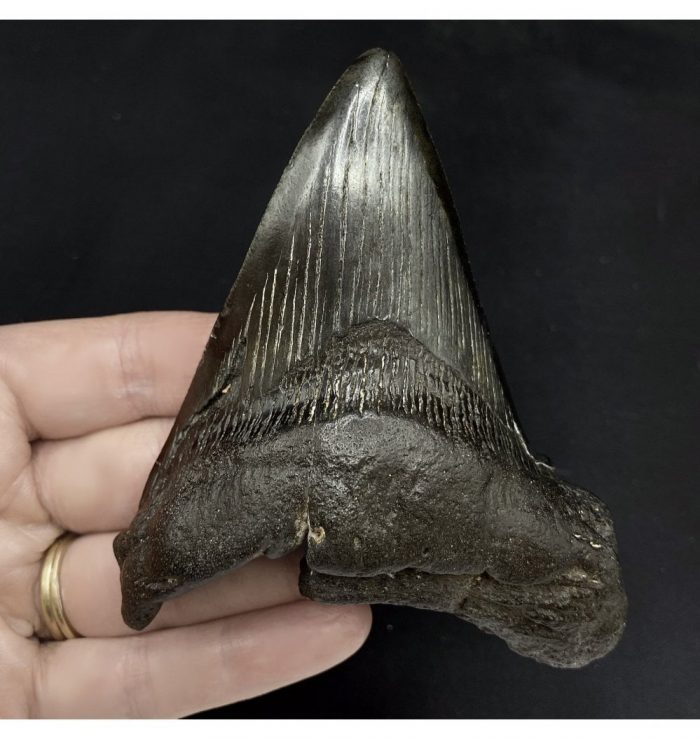
Table of contents
- The market for real and fake megalodon teeth
- Megalodon teeth tests you can perform at home
- How experts identify real megalodon teeth
- Identifying reputable megalodon teeth sellers
- Browse authentic megalodon teeth at Fossils UK
The market for real and fake megalodon teeth
To understand how to spot a replica, it helps to grasp why counterfeit megalodon teeth exist in the first place. The megalodon was the largest predatory shark ever to roam our oceans, and its massive teeth are highly sought after by enthusiasts worldwide. Because flawless, perfectly preserved specimens are incredibly rare, their financial value can reach astonishing heights.
This lucrative demand unfortunately attracts individuals looking to profit from fabricated or heavily altered products. They achieve this by creating sophisticated moulds of real teeth and casting them in cheap materials.
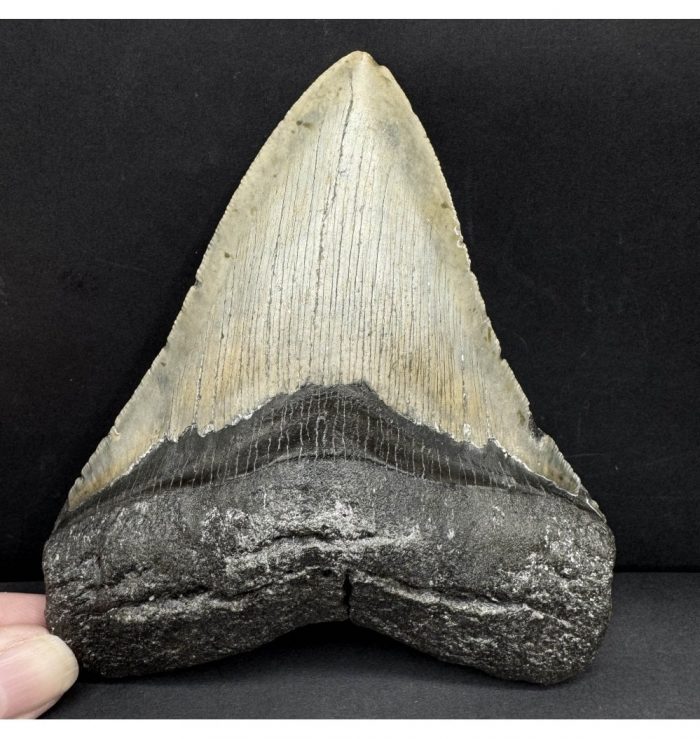
Collectors must be educated on how to avoid these fakes. From a buyer’s perspective, nobody wants to spend their hard-earned money on a piece of plastic masquerading as a genuine relic. Yet, the issue extends far beyond personal financial loss. We must also look at this through the lens of properly preserving history.
The fossil record relies on absolute authenticity to tell the true story of our planet’s ancient ecosystems. When counterfeit items flood the market, they blur the lines of scientific accuracy. Fake fossils diminish the profound legacy of these magnificent creatures and taint the integrity of the wider collecting community. Keeping the fossil record accurate is a responsibility we all share. By learning to distinguish the real from the fabricated, you are playing an active role in protecting geological history for future generations.
Megalodon teeth tests you can perform at home
Discovering that a prized piece of your collection might not be authentic is a deeply upsetting experience. If you are currently looking at a tooth and feeling a wave of doubt, please know that you are not alone. Many passionate enthusiasts have been tricked by convincing replicas early in their collecting journeys. Thankfully, there are several straightforward checks you can do yourself to assess your specimen.
- Check the weight: Genuine megalodon teeth have undergone millions of years of fossilisation. During this lengthy geological process, the original biological material is completely replaced by dense minerals. As a result, a real tooth will feel noticeably heavy and cold in your hand, much like a solid rock. If your piece feels surprisingly light or warms up quickly to the touch of your skin, it is highly likely to be made from modern resin or plastic.
- Examine the serrations: The cutting edges of a prehistoric shark tooth are a marvel of natural engineering. Take a magnifying glass and look closely at the serrations along the blade. Authentic fossils will usually show signs of natural wear, minor imperfections, or historical feeding damage. In contrast, cast replicas often feature serrations that look unnaturally perfect or completely blunt. You might also spot tiny air bubbles trapped within the material of a fake, which is a massive red flag indicating a moulded cast.
Tests to avoid
While it can be tempting to try everything possible to prove your fossil is real, some popular methods can cause irreversible harm. Please steer clear of the following:
- Scratch tests: Taking a blade or sharp tool to the enamel will permanently damage the delicate surface of a genuine fossil. This drastically reduces its value and historical integrity.
- Burn tests: Exposing your specimen to an open flame is extremely dangerous. While it will melt plastic, it can also cause a real fossil to shatter entirely due to sudden thermal shock.
- Hot needle tests: Poking a heated needle into the piece might seem like a clever way to check for synthetic materials. Sadly, it can leave permanent, unsightly burn marks or cause structural damage to an authentic tooth.
How experts identify real megalodon teeth
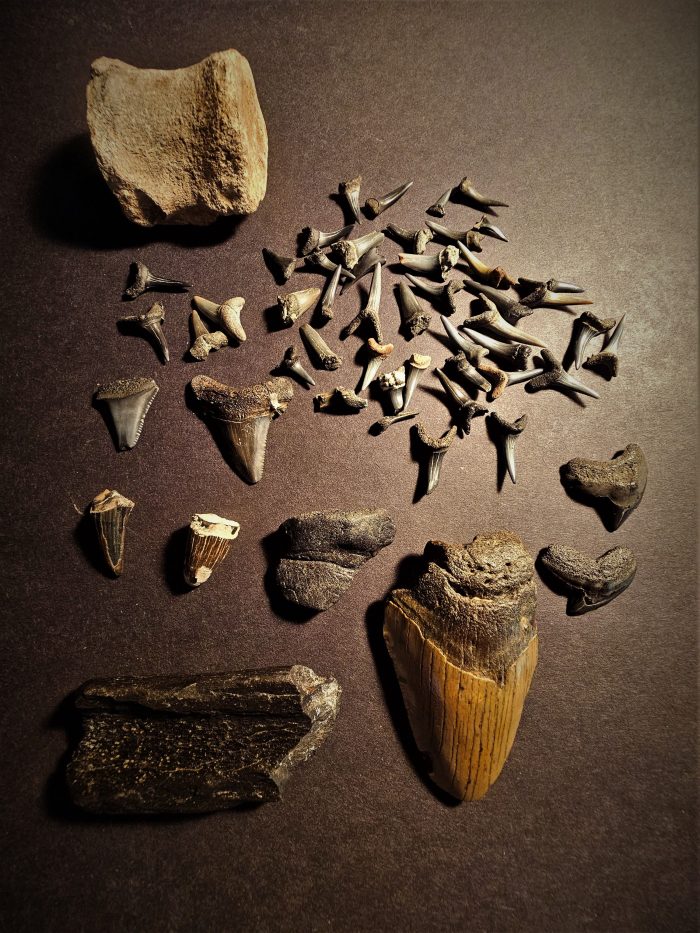
When assessing a particularly convincing replica or a heavily restored specimen, professionals employ advanced techniques. These methods go beyond basic observations and require specific tools or years of dedicated study.
UV inspection
One of the most reliable tools in an expert’s arsenal is ultraviolet light. Shining a blacklight over a megalodon tooth can reveal secrets that are completely invisible in normal daylight. Natural fossilised enamel and root structures generally do not fluoresce under UV light.
However, modern glues, epoxy resins, and paint used to repair or fabricate a tooth will glow brightly. This non-destructive technique is an excellent way to spot a tooth that is mostly real but has had a broken tip or damaged root artificially rebuilt.
Experienced eyes
There is simply no substitute for years of hands-on experience. Experts who have handled thousands of fossils develop a refined instinct for authenticity. This deep familiarity allows them to notice things with the naked eye that others may miss entirely.
A seasoned palaeontologist or professional dealer will instantly register the correct colour gradients of geological matrix, the natural peeling of ancient enamel, and the distinct patterns of permineralisation. They can spot when the texture of the bourlette looks painted rather than naturally worn by millions of years embedded in sediment.
Composition comparisons
Professionals also rely heavily on understanding the exact geological composition of where the tooth was allegedly found. Different fossil sites around the world produce teeth with very specific mineral characteristics, colours, and densities. An expert will compare the composition of a tooth against its supposed origin. For instance, a tooth claiming to be from the coastal rivers of South Carolina should have a specific phosphate-rich colouration.
If a specimen sounds distinctly hollow when gently tapped against another stone, or lacks the correct mineral residue within its root pores, an expert will immediately know something is amiss.
Identifying reputable megalodon teeth sellers
Spotting the key differences between fraudulent operators and a trustworthy retailer like Fossils UK is vital. Fake sellers often hide their contact details, refuse to offer returns, and cannot provide any specific geographical data about their stock. In contrast, you can trust Fossils UK for several key reasons:
- Complete transparency: We operate openly by providing clear contact information, straightforward return policies, and precise geographical data for our items.
- Meticulous verification: Our team carefully sources and thoroughly assesses every single piece we sell to guarantee its true authenticity.
- Unwavering passion: We possess a profound love for the natural world and are determined to share only genuine historical relics with our customers.
- Community dedication: We proudly stand behind our inventory because we understand that honesty forms the very foundation of the fossil collecting community.
- Guaranteed peace of mind: Choosing an established dealer means you are investing in a secure and deeply satisfying buyer experience.
Browse authentic megalodon teeth at Fossils UK
Navigating the world of prehistoric collectables does not have to be a stressful endeavour. By remembering to check the weight, inspecting the serrations for natural wear, and avoiding damaging scratch or burn tests, you can protect yourself from counterfeit pieces. Always remember that relying on reputable sellers is the absolute best way to guarantee the integrity of your collection.
If you are ready to hold a genuine piece of the ocean’s most formidable ancient predator, we are here to help. You can explore our meticulously verified megalodon teeth collection with total confidence. Take the next step in your collecting journey today and bring a real piece of geological history into your home.
Comments are closed here.