
How to Identify a Trilobite (Real vs. Fake)
The world of fossil collecting is incredible, offering a tangible connection to the deep history of our planet. Among the most popular ancient creatures are trilobites, the fascinating, long-extinct marine arthropods. Yet, as trilobite popularity has soared, so too has the market for fakes. Fossil collectors, from enthusiastic amateurs to seasoned scientists, often face increasingly sophisticated counterfeits.
Successfully distinguishing a genuine specimen from a replica is crucial for both the integrity of your collection and the pursuit of accurate palaeontology. This guide is your essential resource. By the end, you will possess the practical knowledge required for accurate trilobite identification, ensuring you know precisely what a trilobite fossil looks like when it’s authentic, and how to spot a convincing imitation.
Ready to sharpen your expertise and ensure your collection is entirely comprised of the real trilobite fossil specimens you deserve? Let’s dive in.

Table of contents
- How to tell if a trilobite fossil is real
- What to look out for in fake trilobites
- The importance of trilobite fossil authenticity
- Why are trilobite fossils so cheap?
- Browse a range of authentic trilobite fossils at Fossils UK
How to tell if a trilobite fossil is real
A truly authentic trilobite fossil is a piece of natural history, capturing intricate details of a creature that existed hundreds of millions of years ago. These details are incredibly difficult, if not impossible, to perfectly replicate with modern techniques. When examining a specimen, look for the following characteristics. Remember, you are far more likely to find authentic specimens when dealing with genuine, reputable vendors, such as Fossils UK.
- Natural Symmetry and Geometry: Although trilobites were bilaterally symmetrical, real fossils often exhibit slight distortions caused by geological processes such as compression and tectonic movement. A fossil that is too perfectly symmetrical, with uniform cracks and breaks across the matrix, should raise suspicion. Look for a natural, slightly uneven form.
- The Faceted Eyes: The eyes of a trilobite are one of its most incredible features. They were complex, compound structures. In a well-preserved, real specimen, you should be able to spot the faint, subtle lines of individual lenses or facets. These minute details are rarely replicated convincingly in plaster or resin.
- A Consistent Matrix Colour: The matrix (the rock surrounding the fossil) should be consistent in colour and texture with the fossil itself, given they have been enclosed together for millions of years. If the fossil appears to be a different rock or material that has been artificially glued or set into the matrix, you may have a ‘composite’ or a partial fake.
- Dorsal Furrows and Pleural Segmentation: Examine the fine details of the three main lobes, the central axial lobe and the two pleural lobes. Real specimens show sharp, but naturally eroded, segmentation along the pleura. These segments should terminate cleanly at the rim, without abruptness or an overly bulbous appearance.
- Repair and Restoration Evidence: A genuine fossil may have undergone preparation, which often involves minor repairs or reinforcement of the matrix. Professional preparation should be subtly done, and a reliable vendor will always disclose this work. Transparency is a key indicator of authenticity.
What to look out for in fake trilobites
Counterfeiters often rely on common, mass-produced techniques that leave tell-tale signs of inauthenticity. By training your eye to spot these giveaways, you can protect yourself from making wasted purchases and adding disappointing items to your collection.
- Excessive Detailing: Paradoxically, a fossil that looks too perfect is often fake. Newly carved or cast trilobites, particularly those from certain Moroccan sources, exhibit unnaturally sharp, exaggerated spines and overly detailed surface textures. Geological processes naturally smooth and dull these features over time.
- Epoxy Sheen and Air Bubbles: Fakes are often cast using resin, plastic, or concrete. Look closely at the surface under bright light; a subtle, unnatural glossy sheen may indicate that a sealant or resin has been applied. Furthermore, small pitting or tiny air bubbles visible in the carapace or the matrix are a huge sign that the specimen was cast, not naturally preserved.
- Uniform Colouring: If the fossil and the surrounding rock are exactly the same flat, uniform shade without any variation, it suggests the piece has been painted or dyed to conceal the casting materials. Real fossils exhibit natural variations in mineral composition and colouration.
- The Glue Line: Composite fossils, where a real head or tail is glued onto a completely fake body, are common. Run your finger carefully around the perimeter of the trilobite. If you can feel or see a pronounced, uniform seam or line where the fossil meets the matrix, it might be a cast that has been placed in a cavity or a composite piece.
- Unusual Postures: While some real specimens show walking or enrolled behaviour, beware of groups of trilobites seemingly interacting in highly complex, dramatic poses on a single slab. While this is possible, it is overwhelmingly likely that these were carved into the rock to increase its perceived value.
The importance of trilobite fossil authenticity
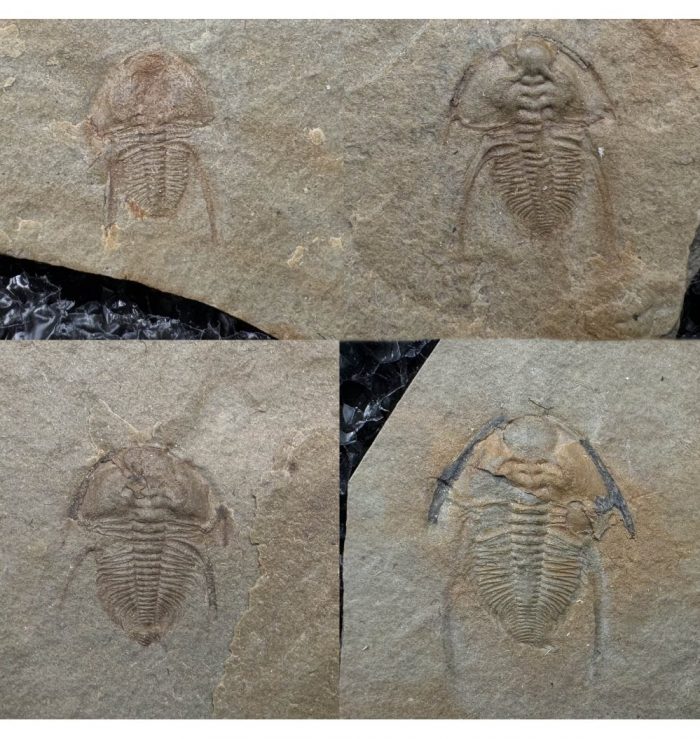
Collecting fossils is more than just acquiring beautiful curios; it is an act of preserving knowledge. The authenticity of real trilobite fossil specimens holds deep importance for several reasons.
For collectors and retailers, authenticity is about trust and investment. A collection is only as valuable as the truth it represents. Buying fakes not only wastes money but fundamentally diminishes the quality and historical merit of your entire collection. For retailers, providing guaranteed authenticity establishes reputation and assures customers they are dealing with professionals who respect the science.
For palaeontologists, the consequences are far greater. Trilobites, which existed for over 270 million years, offer a crucial timeline for the evolution of life on Earth. Every fake or composite piece that ends up in a museum or scientific collection risks spreading misinformation, potentially distorting our understanding of ancient anatomy, diversity, and the geographical spread of these creatures. We have a duty to paint an honest, representative picture of the world before our time, and that begins with genuine material.
Why are trilobite fossils so cheap?
In a world where dinosaur teeth can cost thousands of pounds, trilobites are often readily available for a fraction of the price, making them one of the most accessible fossil groups. This affordability is rooted in two main factors: abundance and geography.
The vast majority of the trilobite fossils available on the market originate from the Ordovician and Cambrian deposits of Morocco. These geological layers have yielded colossal numbers of specimens, particularly the common species such as Phacops. High supply naturally keeps prices lower. Unlike a rare, isolated find, trilobite beds often contain thousands of specimens, ensuring a steady global supply.
However, this abundance, coupled with low cost and high global demand, creates the perfect incentive for counterfeiters. It is cheaper and faster for unscrupulous individuals to carve or cast common trilobite shapes than to spend time carefully preparing real ones. Therefore, vigilance is required: the low barrier to entry for trilobite collecting has, unfortunately, led to a saturated market for fakes.
Browse a range of authentic trilobite fossils at Fossils UK
We have covered the vital signs for trilobite identification, from the natural asymmetry of a genuine specimen to the casting bubbles that betray a fake. By implementing this advice (checking the eyes, examining the matrix, and scrutinising the segmentation), you are now well-equipped to make informed purchasing decisions.
Take the next step in building a collection you can trust. At Fossils UK, we guarantee authenticity, ensuring that you receive a genuine piece of prehistoric history every time.
Continue your journey and browse our full range of curated, ethically sourced specimens today.
Comments are closed here.