
Everything You Need to Know About Shark Teeth Fossils
Sharks are one of the Earth’s most interesting creatures. With relatives dating back millions of years and a distinctive, impactful appearance, sharks have captured the minds of people of all ages for generations. While sharks are not as antagonistic toward humans as they are portrayed in popular media, this fear has played a significant role in the fascination.
The idea of a giant predator roaming the seas and waiting to strike is easy to be afraid of and piques a lot of interest. An intimidating appearance helps sell this idea, and no part of the shark is more intimidating than the razor-sharp teeth. Each bite a shark takes exerts up to 1.5 tons of force, allowing the kings of the ocean to tear through any prey at will.
At Fossils UK, we share the fascination with sharks and their unimaginably powerful teeth. Follow our guide to learn more about how to ensure any shark teeth you find online are legitimate and worth your interest.
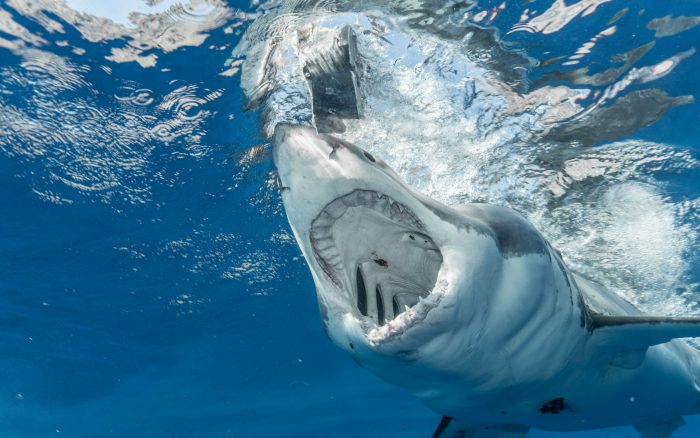
Table of contents
- How big were megalodon teeth
- Shark teeth by species
- How have shark teeth evolved?
- How to identify real shark teeth
- Explore shark teeth and megalodon fossils at Fossils UK
How big were megalodon teeth
| Megalodon teeth were as long as 18 centimetres. |
The megalodon, the largest shark to ever exist, has captured the imagination of many despite going extinct at least 2.5 million years ago. Reaching lengths of up to 18 metres, this titan of the ocean has been immortalised by historians and pop culture alike. In 2018, the biggest shark-related film since Stephen Spielberg’s Jaws hit our screens in the form of The Meg, starring Jason Statham.
This film brought the titular character back to the forefront of many minds as people were desperate to know more about the world’s largest-ever shark. All our measurements and estimates of megalodon come from the teeth we have discovered. The name “megalodon” means “big tooth” and is a very fitting title.

Megalodon teeth were as long as 18 centimetres, making them the undisputed apex predator of the seas. Natural prey and other predators all swam at the mercy of the megalodon, and the enormous shark’s large appetite meant anything was on the menu at any time.
These titans were believed to have around 276 teeth in a jaw that spanned 2.7 by 3.4 metres wide. The megalodon’s bite force is thought to have been one of the most powerful of any creature that has ever lived. Learn more in our comprehensive megalodon guide.
Shark teeth by species
Shark teeth are fascinating not only for their size and power but also for the number of teeth they have. Due to the various species of sharks traversing the oceans, there’s no one set answer to how many chompers a shark’s mouth features. To help break this down, we’ve listed the most well-known species and analysed the total number of teeth for each.
Great white shark
The subject of many films, TV programmes and documentaries, the great white shark is infamous. You’re probably hearing the menacing music in your head just reading about it! Seven rows of 2.5-inch-long teeth make up the great white’s massive bite, with around 300 total teeth. However, not all 300 teeth share the same purpose. Some help make the initial incision, others are geared for tearing, while plenty help process the food. Great whites also have the incredible ability to constantly grow new teeth, many of which replace those lost during daily activities.
Whale shark
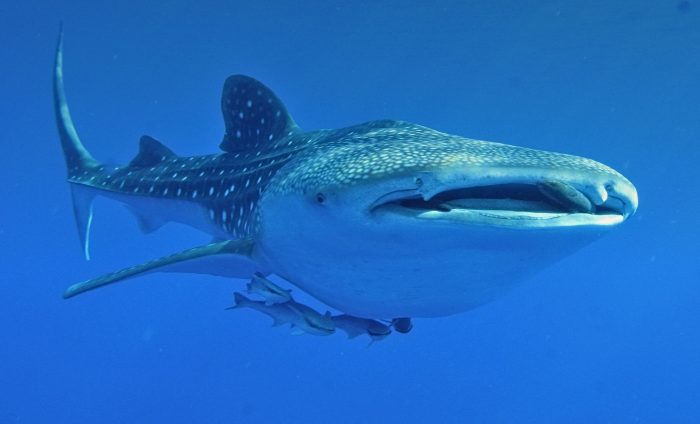
Somewhat surprisingly, whale sharks have a staggering number of teeth. An adult whale shark has up to 300 rows of teeth and 3,000 total teeth in its mouth. What’s more surprising is that this incredible volume of teeth serves little to no purpose. Despite having 10x the number of teeth as the infamous great whites, whale sharks don’t use their chompers for chomping!
Weighing up to 42 tons, whale sharks tend to feed on plankton, squid, krill, and other smaller fish. This is largely due to the extremely small throats of whale sharks, which contrast with their 1.5m wide mouths.
Hammerhead shark
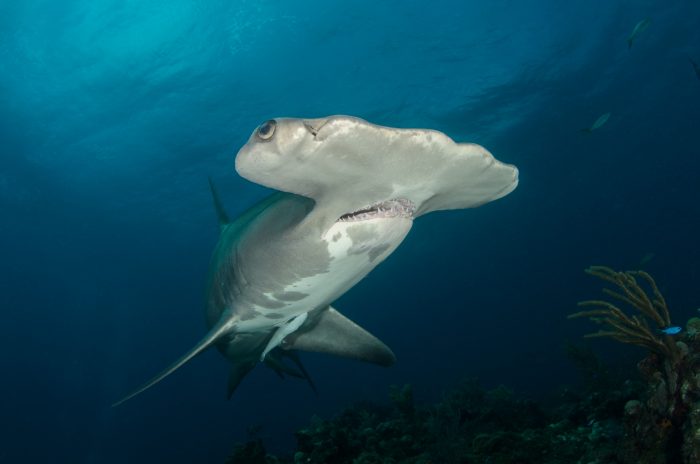
The hammerhead shark’s biggest advantage over its fellow sea-dwelling creatures is its wide head, which gives them an incredible range of vision. This unique appearance often distracts from the fact that hammerhead sharks also have plenty of teeth they use to prey on octopuses, catfish, stingrays, other rays, and skates. Hammerheads have 17 rows of teeth on the upper and lower jaws.
How have shark teeth evolved?
In the era of the megalodon, it is thought that teeth evolved from three-pronged, fork-like teeth ideal for grasping and tearing prey to a flatter, serrated appearance. This allowed the transition into a knifelike shape, a key adaptation for killing and eating larger, fleshier prey such as whales and dolphins (Florida Museum of Natural History, 2019).
Human taste buds sit separate from our teeth on the tongue. In sharks, the taste buds and teeth share the same regions of the jaw, with the highest concentration of taste buds sitting directly behind the last row of ever-regenerating teeth. Research by scientists at the California Institute of Technology (2016) suggests that modern shark teeth may have evolved from taste buds.
One of the scientists involved in this research, Gareth J Fraser, outlined that the stem cells that the teeth and taste buds develop from provide the ability to regenerate teeth throughout the shark’s lifetime constantly.
The study concludes that denticles in the shark’s skin migrated to the mouth and evolved into teeth. The development then became linked with taste buds. This could theoretically give the sharks the advantage of tasting and processing food simultaneously.
How to identify real shark teeth

There are few more disappointing feelings than realising that the artefact or fossil you acquired for a bargain price was too good to be true. To avoid this, it’s important to understand how to spot the real from the fake. With over 25 years of experience under our belt at Fossils UK, we’ve learned some of the key ways fraudsters and scammers look to trick enthusiastic shoppers and what you can do to avoid them. Pay attention to these essential factors:
- Shape – The specific geometry tells you if the object is dental in origin and what part of the jaw it came from.
- Texture – This distinct hardness and texture separate the tooth from common rock fragments or non-dental bone material.
- Symmetry – Symmetry helps determine the tooth’s position in the shark’s mouth.
- Serrations – The presence, size, and pattern of serrations often immediately narrow down the potential species.
For more information and guidance on how to verify shark teeth fossils, read our dedicated guide.
Explore shark teeth and megalodon fossils at Fossils UK
At Fossils UK, we stock a vast range of shark teeth that are ethically sourced and hand-selected from finders, collectors, dig sites and mines. Our collection features fossils up to 100 million years old, so you can have a piece of aquatic history to call your own. Be blown away by the size of real megalodon teeth sourced from South Carolina, or browse our other shark teeth from around the world.
Each shark tooth comes with a specification card verifying the period, species and source location. This insight into one of the most fascinating creatures our planet has ever seen can take pride of place on your home office desk or be the perfect gift for a shark-obsessed loved one.
Comments are closed here.