
How to Identify a Meteorite
Centuries of meteorite analysis have taught us an incredible amount about our solar system’s formation, behaviour and matter. The composition of well-travelled rocks allows researchers and geologists to estimate the origin and longevity of a meteorite before it entered and survived the Earth’s atmosphere.
To receive access to all this invaluable knowledge and information about fascinating meteorites, we must learn how to identify them. At Fossils UK, we’re passionate about all items and remains that can teach us more about the history of our world and beyond.
That’s why we’ve compiled a comprehensive guide on how to identify a meteorite so we can better understand what experts are looking for and potentially encourage budding geologists to go on the trail for extra-terrestrial minerals!

Table of contents
- What does a meteorite look like?
- Where are meteorites often found?
- How do experts identify a meteorite?
- What to do if you think you’ve found a meteorite
- High-quality meteorites at Fossils UK
What does a meteorite look like?
The first and simplest way to determine if you’ve found a meteorite is to give it a quick visual analysis. Meteorites look similar to rocks and stones formed on Earth but have key, unique elements and characteristics to look out for.

For example, iron meteorites distinctive metallic appearance separates them from similarly shaped minerals. Most meteorites also take a somewhat irregular shape compared to Earth rocks. They feature frequent and small indexes throughout that resemble fingerprint marks in wet clay. These pits and curves are known as “regmaglypts”.
Stony meteorites are much darker than their iron counterparts. They more closely resemble Earth rocks, requiring a more detailed and considered visual inspection. Chondrites and other stony meteorites often have a light outer layer of crust formed as the meteor entered the Earth’s intense atmosphere.

Where are meteorites often found?
An essential aspect of identifying meteorites is knowing where to look. Meteorites are most commonly found in large open spaces where they can easily stand out. Vast sandy and icy deserts such as Northern Africa and the frozen plains of Antarctica are ideal identification spots as dark meteorites become much easier to see.
According to 2021 data from the Meteoritical Bulletin Database (compiled by Randy Korotev from Washington University in St. Louis), over 62% of all recorded meteorite discoveries have occurred in Antarctica. View our chart below for a detailed breakdown of the statistics:

Island nations, including the United Kingdom and Ireland, comprise just 0.2% of all known meteorite findings. This is likely due to the vast countryside and densely populated areas that make spotting and singling out dark, unfamiliar rocks much more difficult than in open spaces such as the Sahara.
How do experts identify a meteorite?
Whether found in Australia or Antarctica, each suspected meteorite needs special attention from a team of experts to determine what exactly they’ve discovered. We’ve detailed the exact tests experts take to ensure their identification is 100% accurate.
The weight test
One of the first and easiest assessments an expert will perform is weighing a specimen. Meteorites are incredibly dense. They will feel substantially heavier than standard terrestrial rocks of an identical size. Researchers physically lift the suspected item to gauge its mass. Finding a small stone that feels surprisingly heavy immediately suggests it might have extraterrestrial origins.
The magnet test
The overwhelming majority of meteorites discovered on Earth contain significant amounts of iron. This metallic composition means genuine space rocks almost always possess strong magnetic qualities. Geologists examine the suspected item and test its properties using a small magnet. A noticeable attraction indicates the presence of iron alloys. If the rock does not respond to the pull at all, experts can usually rule out a meteorite classification straight away.
Fusion crusts
As a meteor plunges through our atmosphere, intense friction melts its outer layer. This fiery journey leaves a thin, dark coating called a fusion crust. Scientists closely inspect the exterior of a rock for this distinctive ashen shell. A fresh fusion crust often appears black, whereas older examples may fade to a rusty brown after years of exposure to the elements. Spotting this unique melted surface is a vital step in confirming a specimen actually fell from space.
What to do if you think you’ve found a meteorite
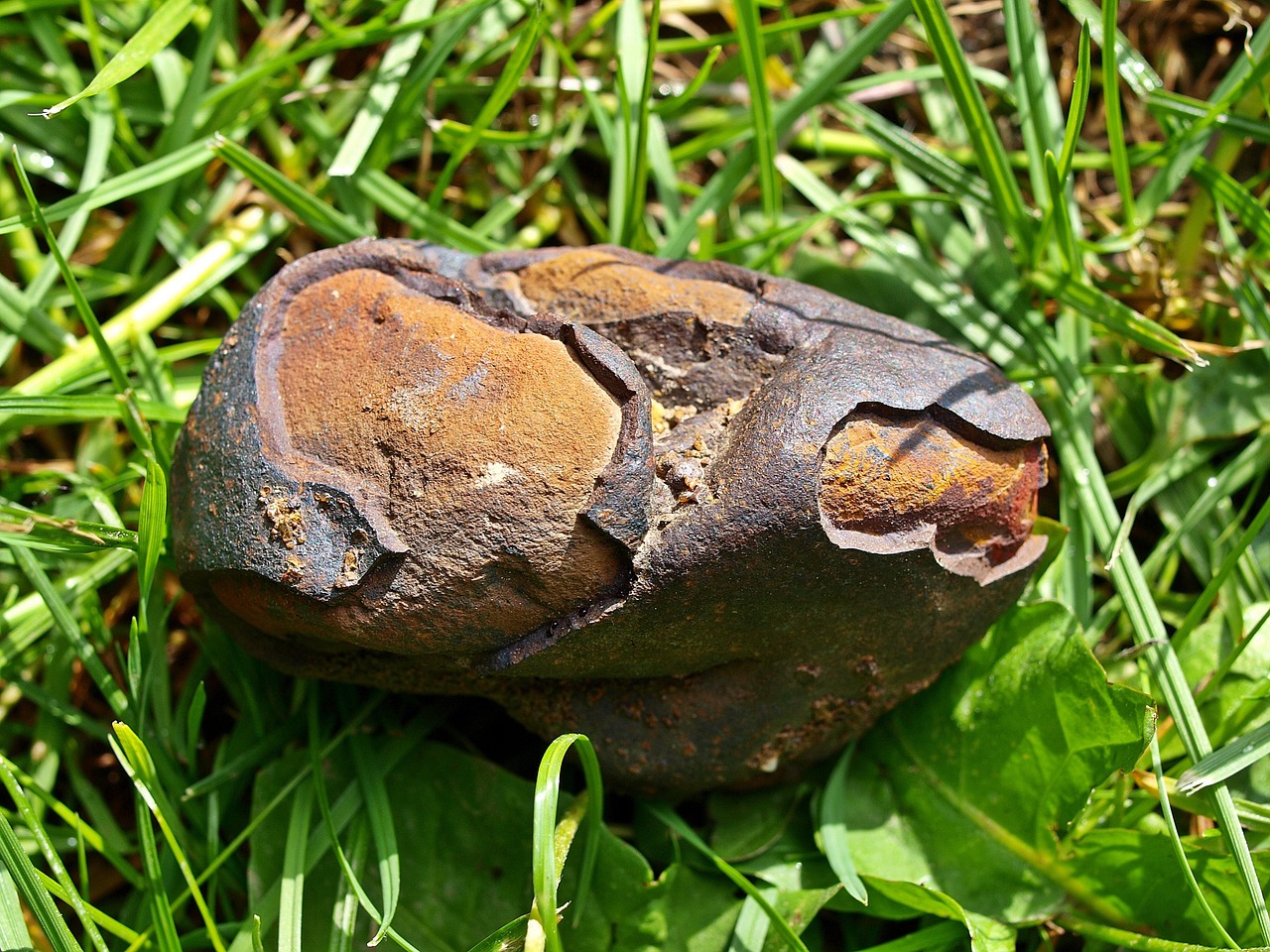
Not every meteorite in the record was found by teams of researchers sent out to locate and study extra-terrestrial items. Some specimens are noticed by everyday people walking through fields, beaches and other regular locations.
If you’re so lucky to potentially come across what you believe to be a meteorite, we have a quick list of dos and don’ts for you to consider.
| Dos | Don’ts |
| Visually inspect the object looking out for a peculiar shape, fingerprint-like indents and a dark outer crust. | Please try to refrain from handling the object, as it can risk contaminating the sample. |
| Take a well-lit photograph of the rock. If you have any objects on hand that you can include in the picture to demonstrate the potential meteorite’s size, even better! | Avoid administering physical assessments such as the magnet test, as everyday magnets can risk damaging the internal magnetic structure of the item. |
| Make a note of where and when you discovered the item for documentation purposes. Google Maps can help with specific coordinates, longitude and latitude. | |
| Using clean tongs if possible, carefully place the object in a clear sandwich bag or foil and seal. Place the bag or foil inside a larger bag, ensuring the sample remains dry at all times. | |
| Carefully weigh and measure the item when you get home, recording your findings. | |
| Report your discovery to your nearest museum or research institution so they can conduct official tests. |
High-quality meteorites at Fossils UK
Every budding geologist’s journey has to start somewhere, and what better way to help you identify a meteorite than to have one on hand for reference as you search? Our collection of meteorites at Fossils UK features various fascinating specimens, all ethically sourced and hand-selected directly from finders, collectors, and dig sites.
Browse the extensive range and discover incredible items that help us better understand our universe, including Lunar & Mars meteorites, tektites & impactites and gorgeous pallasites.
Comments are closed here.