
A Complete Guide to Different Types of Meteorites
Meteorites serve as a stark and powerful reminder that Earth and we who live within it are just one piece of an impossibly large universe that behaves in tremendous and rarely predictable ways. They also allow us to learn invaluable information about our solar system via their size, appearance and chemical composition.
Geologists dedicate their careers to gaining a greater understanding of these magnificent rocks for our educational benefit. Each meteorite that lands on our planet is a new nugget of detail that can be passed on to others, and over the years, scientists have built up quite the dossier of knowledge.
At Fossils UK, we’re fascinated by meteorites and keen to share our knowledge and passion. Read our guide to learn more about what defines a meteorite, the different types that fall to Earth, what they’re made of and how often they visit us.

Table of contents
- What is a meteorite?
- How many meteorites hit Earth every day?
- What’s the difference between a meteorite and an asteroid?
- What are the different types of meteorites?
- Meteorites & fragments at Fossils UK
What is a meteorite?
A meteorite is a piece of debris or fragment of an extraterrestrial object that has survived passing through the Earth’s atmosphere and falls to the planet’s surface. Most meteorites found on Earth are minute fragments due to the harsh conditions objects need to withstand to enter our planet.
Friction, pressure and intense chemical reactions caused by atmospheric gases all deter spatial rocks from falling towards Earth. These factors cause the rocks to heat up and radiate the energy inflicted upon them while entering and passing through the atmosphere.
The difference between meteoroids, meteors and meteorites
Common confusion around meteorites is misattribution. Many often mistake them for similarly named meteoroids and meteors. Each title simply represents the stage of the rock’s existence and its journey.
| Meteoroids | Meteors | Meteorites |
| Still in space and can vary greatly in size | The meteoroid becomes a meteor after entering Earth’s atmosphere at speed and burns up when reacting with atmospheric gases. E.g. shooting stars. | When a meteoroid survives its journey through the atmosphere without burning up and reaches the surface. |
How many meteorites hit Earth every day?

The frequency with which meteorites land on Earth may be surprising to some. According to specialist scientists, an estimated 44 tonnes (44,000 kg) of meteoritic material falls to Earth every single day. Most of the material is obliterated by the atmosphere, which forms the bright shooting stars flying across the sky.
When a dramatically large amount of meteoric material is visible on any given night, this is known as a meteor shower.
Not everything that enters the atmosphere is eliminated, however. According to a recent estimate from the American Meteor Society, between 10 and 50 meteorites hit the planet’s surface daily. (Kjøstad, 2022). Locating and counting all of these meteorites is incredibly difficult and time-consuming, which is why this figure is merely an estimate, albeit a fascinating one.
What’s the difference between a meteorite and an asteroid?
Another common confusion comes with the definition of a meteorite compared to an asteroid or a comet. Meteorites and asteroids are related, with asteroids coming one step earlier than meteoroids in the process we highlighted earlier.
Asteroids are large chunks of rock that float through space and orbit the sun. Much like the meteoroids that break off of them, asteroids can vary wildly in size. The largest known asteroid, Ceres, is approximately 940 km wide, while some are as thin as 6 m. Most asteroids roam in the Asteroid Belt between Mars and Jupiter.
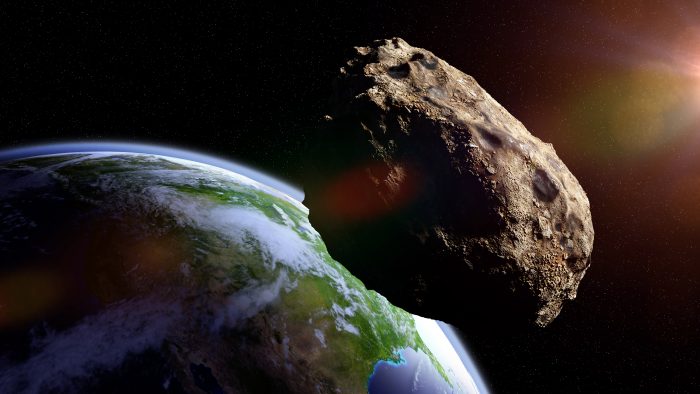

Comets, by contrast, are not related to meteorites and their predecessors. They are similar to asteroids in that they traverse space by orbiting the sun, but their composition separates them. While asteroids, meteoroids, meteors and meteorites are made of rock, comets are composed of ice and dust.
Orbiting the sun causes the ice and dust to melt, eventually transforming the comet from solid to gas. This transition produces a stunning bright light and trail that can be seen from Earth while it floats miles away from the planet. Meteors can only be seen once they’ve entered the atmosphere.
What are the different types of meteorites?
Now that we know and understand what defines a meteorite, it’s important to clarify the different types of meteorites that fall to Earth. The three main classifications of meteorites are stony, stony-iron, and iron meteorites. Several subcategories of meteorites compose all of these distinct types, but the key difference comes down to composition.
Stony meteorites are mostly silicate minerals, stony-iron meteorites contain almost equal amounts of metal and silicate material, while iron meteorites are composed almost completely of metal. For a breakdown of the differences between these meteorite types, please view our table below:
| Stony Meteorites | Stony-Iron Meteorites | Iron Meteorites | |
| Composition | Silicate Minerals | Metal & Silicate Minerals | Metal |
| Est. % of Earth’s Meteorites | >95% | <2% | <5% |
| Subcategories | ChondritesAchondrites | PallasitesMesosiderites | N/A |
Stony meteorites


Making up an overwhelming majority of the Earth’s total meteorites, stony meteorites are made up almost entirely of silicate minerals that are abundant in the solar system and asteroid belt, with some having very small amounts of metallic iron scattered throughout.
Stony meteorites are broken up into two key subcategories: chondrites and achondrites. Chondrites are some of the oldest rocks found on the planet from the solar system, entering the Earth over 4.5 billion years ago. Their age gives us valuable information about the early solar system and its formation, with many chondrites sharing similar compositions to the sun. Approximately 85%-87% of the planet’s total known meteorites are chondrites.
Achondrites are meteorites formed from asteroids, Mars and the moon. These igneous rocks experienced melting and differentiation billions of years ago. Most achondrites originated from asteroids formed at the beginning of the solar system, while others are lunar or Martian.
Stony-iron meteorites

Stony-iron meteorites are formed of almost exactly equal parts metal and silicate minerals. These meteorites are incredibly rare and include the subcategories of pallasites and mesosiderites.
Pallasites feature stunning olive crystals and are seen to be some of the most beautiful meteorites that scientists believe are likely formed when olivine-rich asteroid mantles mix with the metallic core. An interesting quirk about pallasites is that they’re magnetic, thanks to their iron-nickel matrix.
Mesosiderites are a result of the collision of two separate asteroids. The debris from each asteroid can mix to form a new kind of meteorite that features molten metal and silicate rock fragments.
Iron meteorites
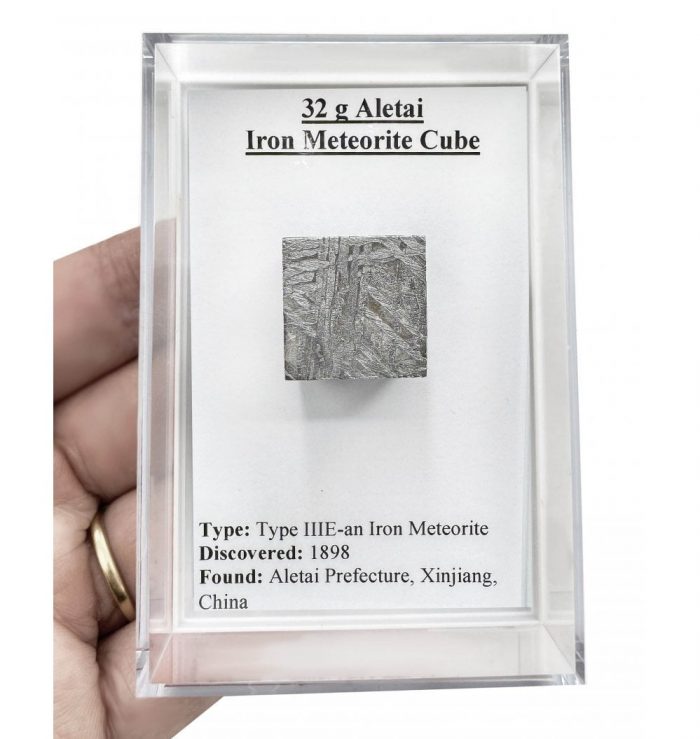
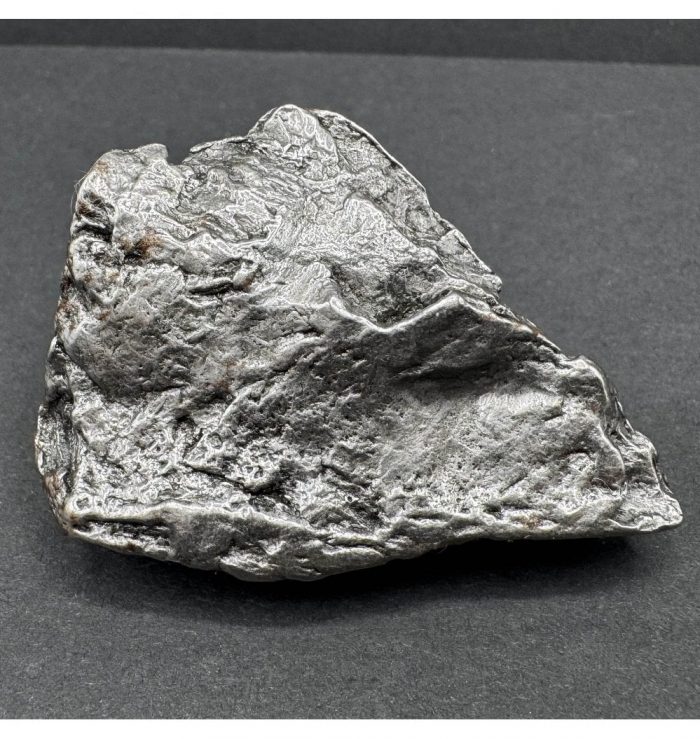

Iron meteorites are almost contradictory in their rarity. While they only make up a few per cent of the Earth’s total meteorites, they are incredibly common in scientific and display collections due to their striking recognisability. The near-entirely metal composition makes iron meteorites resistant to weathering and have a very different appearance to our planet’s standard rocks.
The majority of these rocks are believed to be cores of melted asteroids during the decay of radioactive elements in the early solar system. The metallic core formed as the dense iron and nickel within the asteroid sank before experiencing differentiation and becoming a solid from a molten state.
Campo del Cielo in Argentina is a rich area for iron meteorites, with over 100 tonnes of fragments recovered from its 18.5 km crater field since its discovery in 1586.
Meteorites & fragments at Fossils UK
Continue your meteoritic journey with our vast collection of meteorites at Fossils UK. We stock a wide range of high-quality meteorites that are ethically sourced and hand-selected directly from finders, collectors, and dig sites. As well as the stony, stony-iron, and iron meteorites we’ve explored in this article, our collection features stunning tektites and impactites for you to explore.
Whether you’re an avid collector looking for the next big find or just getting started and intrigued to learn more, our rare meteorites offer a great insight into our solar system and its composition.
Choose Fossils UK for certified and genuine meteorites and learn how and why these magnificent minerals find their way to our planet for our study and wonder.
Comments are closed here.