
How Are Fossils Prepared?
Almost all the fossils you see for sale or on display in museums, detailing the life and times of creatures that came before us, undergo a significant preparation process to be presented in the best possible condition.
Discovery is by no means the be-all and end-all of fossils. Skilful preparators must then exercise considerable patience to use their unique abilities on fossils to make them display-worthy.
Proper fossil preparation requires one or more experienced preparators to apply their knowledge and skill, assisted by specialist tools and equipment, to eventually produce a fossil that can be sold or shown at its best. Read our comprehensive guide, and watch our accompanying YouTube video to learn about fossil preparation.
Table of contents
- What does a fossil preparator do?
- What tools and equipment are used to prepare fossils?
- What are the main types of fossil preparation?
- How long does it take to prepare a fossil?
- Our fossil preparation service at Fossils UK
What does a fossil preparator do?
Most fossils are discovered while sealed within a rock. Despite appearing hard and sturdy, plenty of fossils can be surprisingly fragile; after all, they have been left at the Earth’s mercy for millions of years. Fossil hunters often dig out the rock the fossil was embedded in and secure it in a plaster jacket to ensure it reaches the preparator in one piece.
The preparator can then carefully remove the plaster jacket and rock using tools and methods they deem appropriate for the relevant fossil. While removing these layers makes fossils more suitable for display and sale, it also helps reveal key information about the source and age of the fossil.
After removing the external layers, the preparators proceed with patience and caution while sanding down the fossil. The skilled preparators use the utmost care and precision to transform the once clunky remains into a fossil ready to be displayed in any museum or exhibition. Some light buffing, brushing and polishing end the intricate process, albeit only until the next fossil arrives.
What tools and equipment are used to prepare fossils?
A man is only as good as his tools. The famous quote attributed to Emmert Wolf may not fully appreciate the individual skill required to perform fossil preparation in this context. Still, quality tools certainly go a long way to ensuring a fossil is properly prepared. We’ve broken down the tools and equipment preparators use into specific categories.
Machinery
There is no quick fix to fossil preparation. It takes time, patience and the help of multiple tools to get the job done properly. Even the tools need assistance, which can come from a quality air compressor. An air compressor will provide air to several connected pen tools that work away at the rock for air abrasion and smoothing.
Preparators need to monitor the water levels in their air compressors to preserve the health of their tools. Emptying the tank around once a week helps manage the moisture levels so the tools don’t suffer from water damage.
Rock saws are ideal for cutting through large chunks of rock surrounding the fossil, saving preparators time on chiselling down from the beginning. Rock saws are also great for making bases on rocks, allowing them to sit flatteringly.
Dust extraction is another fundamental part of the fossil preparation process. Many preparators, including us at Fossils UK, use large industrial vacuum cleaners to take in and retain excess air and dust from the rock. Extraction is essential because it removes potentially harmful particles from a fossil that could cause serious health issues if accidentally consumed.
Safety equipment
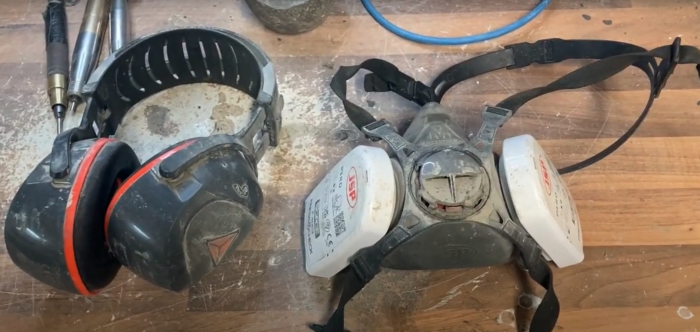
High-quality respirators must be worn during dust extraction to protect preparators from inhaling toxic or harmful particles. These respirators must have specifically sized air holes relevant to fossil preparation to guarantee the worker’s safety. Ear protectors are also highly recommended during smoothing and other steps.
Pen tools
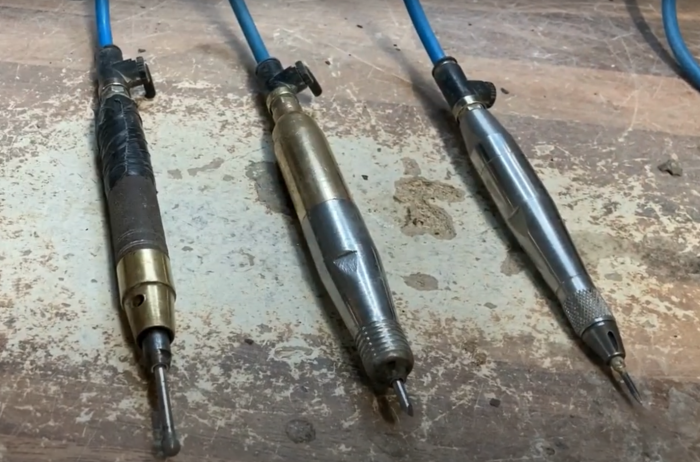
The aforementioned pen tools connected to the air compressor are key for getting the perfect cut around the fossil. These tools, often described as air scribes, chip away at the rock without touching the fossil. Preparators carefully use air scribes to work around the fossil for the best possible cut.
Different tips can be used for different jobs. A large, hard rock may require a chunkier head, while a finer tip will be required for more delicate excavated fossils. Multiple pen tools will often be used on the same rock, with the finer tools taking care of the precise details towards the end of the smoothing process.
Patience is invaluable when working with these tools, as the fine cuts need the care and precision of slow hands. Air abrasion follows smoothing to ensure any loose debris is removed.
Finishing touches

Once smoothed and air-abraded, the fossil is ready to be spruced up for display. Many preparators use high-quality polishing equipment to get an outstanding finish on their carefully prepared fossils.
A great way to add the final bit of gloss to a fossil is to apply liquid beeswax using a paintbrush and leave the item to dry. At Fossils UK, we often finish by buffing with a soft shoe brush, so that every part of the fossil looks its best.
What are the main types of fossil preparation?
There are two main approaches to fossil preparation across the industry – mechanical and chemical. Preparators will choose the method they feel best suits their skills and the tools at their disposal. Below, we’ve broken down the key aspects of each technique.
Mechanical preparation
Many preparators prefer mechanical preparation, which has evolved alongside relevant technology. Physical force and handheld tools are essential for mechanical preparation, with early preparators carefully using hammers and chisels to slowly chip away at rocks without damaging the fossils within them.
In modern preparation, hammers and chisels are occasionally used, but air scribes are the primary tools. Preparators hold these scribes like a pen and have a great deal of control of the movement and force they can apply to rocks.
However, patience is the best tool in a preparator’s arsenal when performing mechanical work. The ability to slowly and carefully go about their job while paying attention to the finest details is just as valuable as any piece of equipment.

Chemical preparation
Some fossils may be deemed too delicate to be broken down using manual tools. In these circumstances, some preparators can identify chemical variations between the fossil and the rock it’s housed in to separate the two. Dilute acid is used to dissolve the rock around the fossil. Which chemicals are used for this depends on the rock’s composition.
Chemical preparation can be repetitive and potentially hazardous depending on the chemicals used. The fossil must be rinsed regularly and coated before each treatment to protect it. These steps are essential as any chemical debris on the fossil could damage it over time.
How long does it take to prepare a fossil?
Each fossil is completely different from the next, so there is no set timescale on how long preparing a fossil will take. An individual fossil will need to be assessed by the preparator to determine how complex the makeup of the fossil is, how delicate and potentially fragile it is, and the tools needed.
Simple fossils can be ready for display in as quickly as a few hours. In contrast, more complicated and delicate items may take months for the rock to be properly removed in a fashion that safely preserves the fossil within it.
Our fossil preparation service at Fossils UK

Have you discovered a fossil and are curious about what’s inside? At Fossils UK, we offer an incredible fossil preparation service for avid collectors and first-time finders alike! We can transform your stone from the beach to a stunningly prepared fossil ready to display on your mantlepiece or give it as a thoughtful gift.
Post your items or visit us at our retail shop in Whitby so we can assess your fossils. We will then return a perfectly prepared piece that has been cut, smoothed and polished to your liking. We use high-quality air tools to remove the rock around your item for £25 an hour (including VAT).
Trust us to prepare and present your fossil at its best and contact Fossil UK for all your fossil preparation needs today.
Comments are closed here.