
What skin did dinosaurs have and how did it feel
Our fascination with dinosaurs and prehistoric life has led to some remarkable discoveries in the palaeontology field, yet we still have many questions to answer. This drives the intrigue and obsession many of us have with learning as much information as possible about dinosaurs.
There are some questions for which we have concrete answers thanks to years of hard work, careful consideration and painstaking research conducted by our finest naturalists, scientists and historians. Some of these questions are raised by new and old dinosaur lovers every day.
Plenty of common dino queries revolve around the anatomy of different kinds of dinosaurs. Did they all have the same skin? What differences were there between species? Did the dinosaurs that birds descend from have similar feathers? At Fossils UK, we aim to answer these questions and more in our comprehensive guide to dinosaur anatomy.
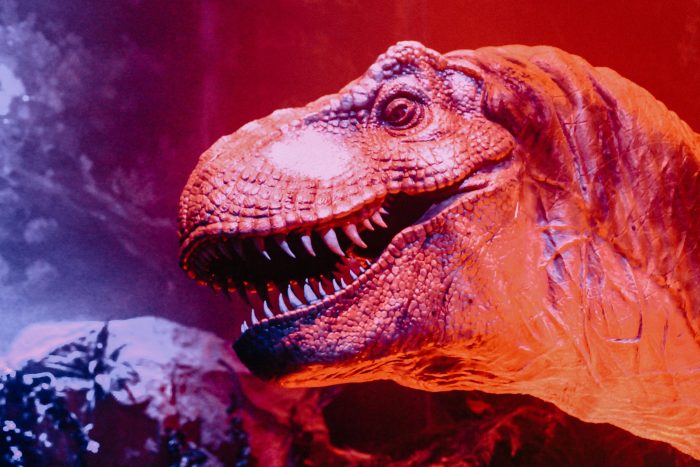
Table of contents
- What kind of skin did dinosaurs have?
- Has dinosaur skin ever been found?
- How rare is fossilised dinosaur skin?
- Did dinosaurs have feathers?
- Learn more about dinosaurs at Fossils UK
What kind of skin did dinosaurs have?
Many wonder what dinosaur skin would’ve felt like and how closely it would relate to creatures that roam the earth today. Sauropods, dinosaurs with small heads, extremely long necks, large bodies and long whiplike tails, likely had dry and warm skin.
These dinosaurs didn’t have sweat glands, so creatures such as Brontosaurus and Diplodocus didn’t perspire. Their bodies would be covered in small scales that provided necessary protection and prevented water evaporation. Snakes are the main example of modern reptiles with scaly skin, but sauropods differed as the scales didn’t overlap and had a bumpy texture.

Dinosaur skin colours are often assumed to be greys, greens or browns. Much of this assumption comes from sketches and portrayals of dinosaurs in popular media, such as Jurassic Park or Disney’s Dinosaur. However, most of these interpretations are merely guesses. We don’t know 100% what colours sauropods were. Scaly reptiles that live today can be quite vibrant, so dinosaurs may have been similar.
Has dinosaur skin ever been found?
While most dinosaur discoveries come from bones, claws and teeth, some examples of dinosaur skin have been found. One of the most famous finds in dinosaur history involves dinosaur skin being found by Charles H. Sternberg and his sons.
The Sternbergs worked in Converse County, Wyoming, in 1908 when they discovered the Trachodon mummy. This was the first major discovery of a dinosaur, with most of its skin completely preserved alongside some muscles and a near-complete skeleton. This mummified dinosaur captivated the scientific world and was bought by the American Museum of Natural History.
Henry F. Osborn rigorously analysed the Trachodon in 1912 and published various photographs and two restorations depicting the creature as bipedal. Trachodon was speculated to have a pronounced skin colour by Osborn.
This example and other discoveries can only occur if the dinosaur skin mummifies before fossilisation. Mummification is possible should bodily fluids exit the deceased creature, allowing its skin to dry and be preserved prior to fossilisation.
How rare is fossilised dinosaur skin?
Fossilised dinosaur skin is not quite as uncommon as fully preserved skin, but it’s still very rare. Despite skin being the body’s largest organ, bones, claws, and teeth are all far more common. This is because these harder body parts take much longer to decompose, providing a bigger window for fossilisation to occur.
Skin is usually eaten by scavengers shortly after death or quickly rots away. For dinosaur skin to fossilise, it must be buried very quickly after death by sediment. The skin can still decompose over time and is often replaced by nearby minerals, which helps maintain its shape.
Fossils that resemble the dinosaur skin’s shape are known as skin impressions. These trace fossils are often created when a dinosaur’s skin presses into surrounding mud or sand and is hardened to stone during fossilisation. In the rare cases where the skin hasn’t already been eaten or decomposed, skin impressions can be found.
Did dinosaurs have feathers?
Despite the persistence of sauropods from the Early Jurassic Epoch to the Cretaceous Period, not all dinosaurs during this spell were as scaly as a Brontosaurus. Some dinosaurs even had feathers! The majority of feathered dinosaurs belonged to the theropod group.
Theropods were carnivorous dinosaurs during the Carnian age of the Late Triassic Period. We first learned about feathered dinosaurs as recently as the 1990s, and it wasn’t confirmed until several years later.
In the 90s, fossils with feather-like structures were found and analysed in China. It wasn’t until 2011 that we had conclusive evidence. On an expedition in Alberta, Canada, palaeontologists discovered amber samples featuring feathers. These feathers were believed to be from dinosaurs and the age was estimated to be between 70-80 million years, placing them in the Cretaceous Period.

One of the most famous feathered dinosaurs is the Spinosaurus, the largest known carnivorous dinosaur. Theropods are also directly related to today’s birds, the world’s oldest living dinosaurs.
Learn more about dinosaurs at Fossils UK
To learn more about dinosaurs and possess your own piece of natural history, browse our extensive collection of dinosaur fossils at Fossils UK. We proudly stock a collection of ethically sourced dinosaur fossils, hand-selected directly from finders, collectors, and dig sites. Shop rare fossils from various periods and locations.
Our dinosaur fossils are sourced from as far as the United States, Morocco and Madagascar, alongside fascinating items found closer to home in places like the Isle of Wight. Choose from dinosaur teeth, bones and claws for a special desk item or as a gift for a dino-obsessed loved one.
If you’re eager for more prehistoric information, you can learn about various topics, including prehistoric land and sea creatures, in our blog or Megalodon hub. You can even find your own fossils on our hunting trips! Learn more and book today.h
Comments are closed here.