
When Were the First Dinosaur Fossils Found? A Journey Back in Time
It is truly fascinating that we can learn so much about the creatures that came before us and the conditions of our extraordinary planet. The work, research and discoveries achieved by some of our best scientists and historians have painted a picture so vivid that we often take it for granted. The key to unlocking all this knowledge about the prehistoric world and the creatures that inhabited it is fossils.
Fossils and the abilities of researchers, scientists and palaeontologists to correctly interpret them have given us a wealth of information about dinosaurs and climates. At Fossils UK, we believe that the access we have to this knowledge should be widely celebrated. The sheer amount we can learn about different creatures is staggering and truly invaluable.
To help recognise and revel in this vast pool of prehistoric intelligence, we want to look back on the first discoveries that paved the way for research and findings that define our modern knowledge and understanding of dinosaurs. Read on and learn about the incredible work and discoveries of prehistoric history and why we can gain such a wide understanding today.

When was the first dinosaur fossil found?
In 1677, naturalist Robert Plot was given an unusually large bone found in a Cornwall quarry. Fascinated by the size of the bone, Plot studied and correctly identified it as at least part of a thigh bone. After ruling out the possibility of the femur belonging to a horse or elephant, Plot felt the only reasonable truth was that the bone came from a giant human. It was an assumption of its time and one we perhaps lack the context to appreciate today.
Almost 150 years later, in 1824, the first dinosaur was named and identified by another English naturalist, William Buckland. Buckland studied gigantic jaw and limb fossils from the aptly named Stonesfield in Oxfordshire. The historic realisation Buckland made was that these bones couldn’t have possibly belonged to a known living creature.
Buckland concluded to the Geological Society of London that they must have belonged to a large unknown reptile he would name Megalosaurus, meaning ‘great lizard’. It has become accepted since the bone analysed by Plot in the 17th century also belonged to Megalosaurus.
When did the word ‘dinosaur’ enter our vocabulary?
This monumental moment saw Megalosaurus become the first officially recognised dinosaur, but the word dinosaur was not used to describe the species at the time. After all, how could you possibly know how to group something as if it’s the first you’ve ever seen?
It wasn’t until 1841 when Richard Owen referred to the Megalosaurus and two other large reptiles, Iguanadon and Hylaeosaurus, as ‘Dinosauria’ in a lecture. The following year, the first written use of the term emerged when Owen repeated it in a report.
Dinosauria translates from the Greek term meaning ‘terrible lizard’. Instead of referencing this exact translation, Owen opted to describe the reptiles as ‘fearfully great’. Owen’s research was vital in setting the standards for how dinosaurs were assessed and identified. His work allowed us to achieve realistic size estimations by measuring individual vertebrae.

dinosaur fossil in rock 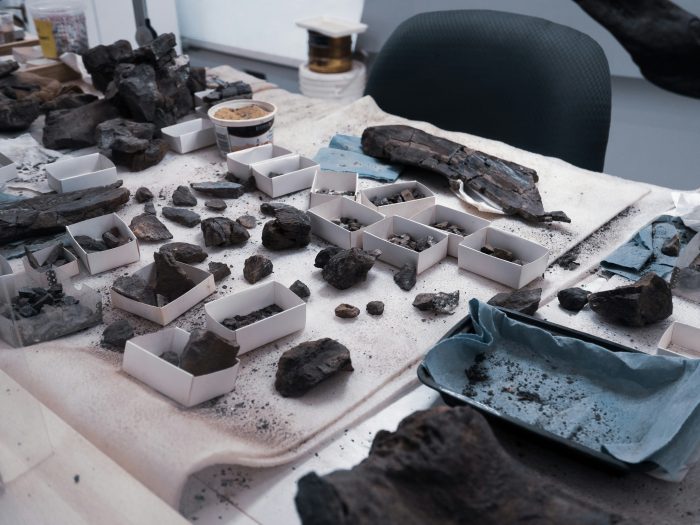

The timeline of key dinosaur discoveries
These initial discoveries and estimations of the lives and appearances of dinosaurs started an incredible snowball effect, leading to new finds that widened our understanding of prehistoric life. The likes of Buckland and Owen would be astounded at the level of knowledge we have access to today, and their work played a monumental role in starting the process.
Several landmark moments in palaeontology and dinosaur discovery have shaped our understanding of several prehistoric species and creatures. We’ve created a timeline of the most significant.

While the 19th century kickstarted our exploration into dinosaurs and what that word would come to mean, the 1900s showed us just how much we had to learn. Monumental discoveries, including the first remains of a T-Rex and a dinosaur that had almost all of its skin preserved, began a new age of prehistoric research.
We have barely scratched the surface of what came before us which is evidenced by the world’s largest dinosaur, the Argentinosaurus, was discovered as recently as the 1990s.
How can we identify dinosaur fossils?
Every dinosaur discovery made by naturalists, researchers and scientists comes from accurate identifications of fossils. But how do these experts know what they’re identifying and how accurate their assumptions are? When searching, palaeontologists will look for peculiar shapes, colours and patterns that indicate this isn’t your average stone.
Once they’ve noticed something, they run a few simple spot tests, like observing if the line ends in a hole (a sign of a bone) and if the suspected bone sticks to their fingers. If it does, they’ve found themselves a fossil.
To correctly identify the bones they have discovered, researchers will cross reference other recorded dinosaur findings to see if they can spot an exact match to what they’ve brought back. Once they do, they can file it and make estimations on species, location, living periods and more.
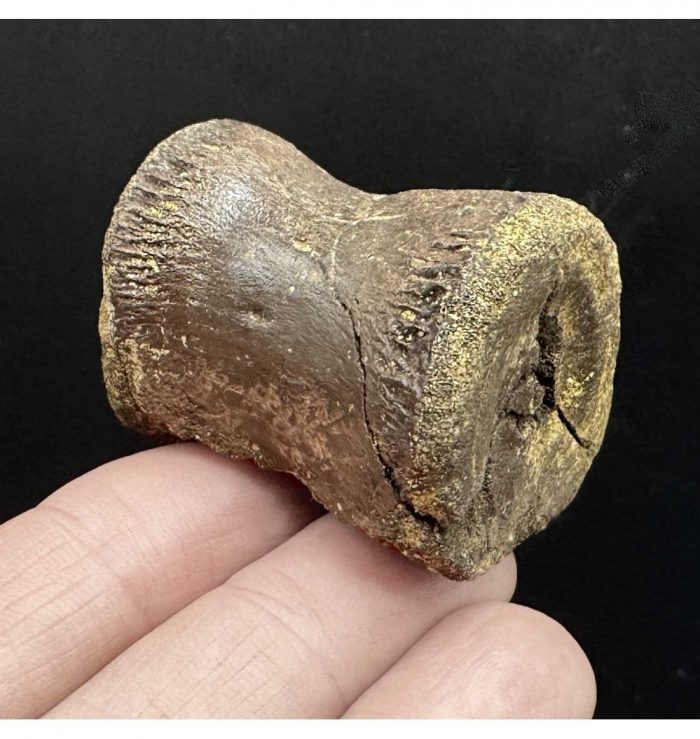
Dinosaur fossils at Fossils UK
Explore millions of years of history with our extensive collection of dinosaur fossils at Fossils UK. Whether you’re beginning your fascination with prehistoric life or you’ve been hooked since your early years, we have a plethora of dinosaur teeth, bones and claws available.
Ethically sourced and hand-selected directly from finders, collectors, dig sites and mines, these dinosaur fossils are our time machine to the world that preceded us. They allow us to learn an unbelievable amount about these larger-than-life creatures. A fossil from our collection would make the perfect gift for any dinosaur fanatic in your life!
Comments are closed here.