
How are Fossils Formed? Everything You Need to Know
Fossils have fascinated us for centuries, giving us an insight into the creatures and environments that came long before us. As technology and knowledge have developed, we’ve been able to determine lifespan, era of existence, dietary habits, cause of extinction, and so much more about various incredible creatures that once roamed the land and seas of our planet.
The hard work and fossil discoveries made by palaeontologists through the years mean we can create clear imagery of what life on Earth used to look like, but how did these fossils come to be?
In our guide at Fossils UK, we’ll discuss how fossils are formed, what can become a fossil, and where and why we can find fossils all around the world. Read on for a comprehensive deep dive into the formation and study of the various kinds of fossils.

Table of contents
- What is fossilization
- How are fossils formed?
- Can anything become a fossil?
- Why can we find fossils?
- Where are fossils most commonly found?
- Where can we find fossils in the UK?
- Fossil collections at Fossils UK
What is fossilization
How are fossils formed?
A very specific process is required for a fossil to form and must happen quickly. Fossils are commonly found in sedimentary rocks that have risen to the surface over millions of years thanks to the Earth’s ever-changing conditions.
These rocks are formed by sediments such as water, mud and sand that rapidly bury the remains of deceased creatures. Sedimentary burial protects the bones and other remains that would have dissolved or broken up naturally.
The vast majority of fossils we discover are from marine animals, around 99% according to the Natural History Museum (2019). This is due to the oceanic environment lending itself to the fossilisation and preservation processes, whereas areas where remains decay quickly, like rocky mountains, are less fruitful.
Below are the most common methods of fossil preservation.
Petrification
Petrification is the most common method of fossilisation. This is achieved through the process of permineralisation, which involves mineral-rich fluids moving through the sediment that the shell or bone is buried in. As the fluids move, the rock becomes filled with preserving materials such as calcium carbonate surrounding the remains. Petrification happens when these minerals replace organic material entirely, turning the remains into stone.
Compression
Some fossils are formed when remains are compressed at death. The weight and high pressure of the above sediments and perhaps seawater in the case of marine fossils create a dark imprint of the fossil into the rock.

Moulds & casts
Particularly common for invertebrates, the formation of moulds and casts allows the remains of creatures such as snails to be preserved for millions of years. Shells of these creatures can dissolve easily, leaving a space in the shape of the original material. This is a mould. Later, sediments may fill the space, forming a cast. This impression of the original material is formed when sediments make contact with the mould.
Preserved remains
In rare circumstances, remains can be preserved as original skeletons and soft body parts. The most common remains of this type are insects trapped in amber due to a tree sap that has the capacity to hold on to and surround organisms.
Can anything become a fossil?
Fossilisation is actually a very rare process. The exact circumstances of a rapid burial and sufficient water and mineral-rich fluids reaching the remains to form a protective shield don’t occur often enough for every living organism to become a fossil. Instead, most dead creatures decompose completely.
When remains are fossilised, we may never even discover them! Plenty of fossils are lost and are never found by palaeontologists due to the incomplete nature of most fossils.
Factors such as location, formation of body parts, cause of death and interference from other living organisms all contribute to whether remains can fossilise. As mentioned by John Pickrell (2018) writing for the BBC, “less than one-10th of all species that have ever lived became fossils.” So we should take good care and work to preserve the ones we have found.
Why can we find fossils?
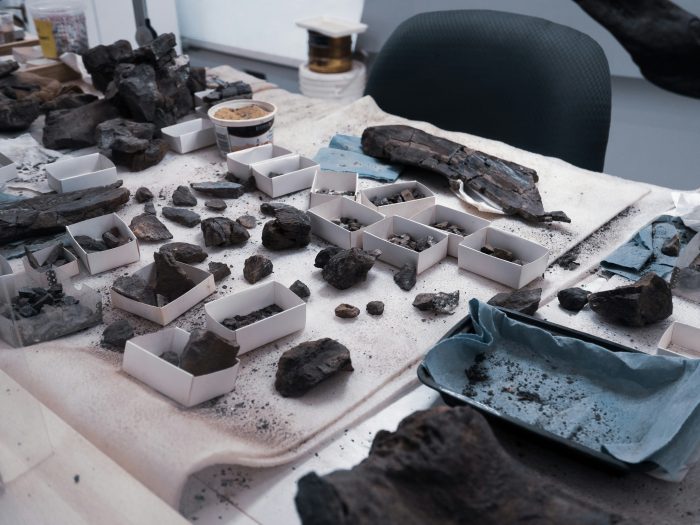
The rapid burial that remains experience to become fossils is often a mixture of mud, sand and sometimes volcanic ash. Sea creatures that go through a similar burial will be buried by mud and seawater. These materials, over millions of years, form sedimentary rocks.
Petrification occurs in this period when the remains are trapped beneath the sediments. An uplifting process will then occur, seeing the sedimentary rock rise to the Earth’s surface, visible above ground. Wind, water and freezing temperatures will eat away at the rock over time until parts of the creature’s remains are visible.
Parts of the remains will break off onto the surface while the rock continues to erode. Thorough and sometimes lucky, fossil hunters will then discover these bones and body parts that have broken away from the rock and study them diligently to learn about the species, its environment and how the Earth has changed to accommodate today’s life.
Where are fossils most commonly found?
We know that the vast majority of discovered fossils are marine animals, and many are found in sedimentary rocks. What’s just as fascinating to analyse is where in the world fossils are regularly discovered and what those areas inhabited during prehistoric eras.
While fossils have been found on every continent on Earth, some areas are higher in volume than others. The Heel Creek Formation, located in the geological zone between Montana, Wyoming, and North and South Dakota, sees the most fossil discoveries in the United States. Various dinosaurs, fish, amphibians, and early mammal cretaceous fossils have been discovered in this area.
The Yunnan province in China is home to a UNESCO World Heritage site, the Chengjiang Fossil Site, that has been listed for preserving an incredible range of hard and soft tissues from over half a billion years ago. The Qingjiang River has seen discoveries of over 100 prehistoric animal species, which is more than half known to scientists worldwide.
Another prolific area for fossil discovery is the deserts of Argentina. The desert environment lends itself to fossil preservation as the sand shields any remains, preventing them from decomposing or being picked off by other creatures.
Where can we find fossils in the UK?

If you’re excited to find fossils yourself, luckily, you don’t need to travel across the globe to the US, China or Argentina. Several locations in the UK are perfect for searching for fossils. Dorset, Torquay, Cumbria and Maroles Sands in Wales are all fossil-rich and well worth visiting.
At Fossils UK, we offer guided fossil hunting trips in one of the most prolific fossil areas in the country. The North Yorkshire Coast is rich with ammonites and other fossils that enthusiastic amateur geologists can discover on our trips. Secure your place and book a fossil hunting day.
Fossil collections at Fossils UK
Find collections of fascinating fossils that give us a look into the world that came before us at Fossils UK. Discover various dinosaur fossil species that are ethically sourced and hand-selected directly from finders, collectors and dig sites. Our fossils are sourced from all over the world and come with specification cards that detail the species and location of your fossil.
If you have a friend or loved one who has loved the prehistoric era since their first watch of Jurassic Park or educational documentaries, browse our fossil gift collection to find the perfect item for them.
Comments are closed here.