
Top 10 Facts About the Stegosaurus
The stegosaurus is one of the most easily recognisable dinosaurs to have ever lived. Its extra-long body and spiny back help the creature stand out amongst the other dinosaurs that lived during the same period.
While you may know what the stegosaurus looks like, there’s still plenty you might not have learned. That’s why we’re here! At Fossils UK, we share the same passion for dinosaurs as you, and we want to share our knowledge so you can become a true stegosaurus expert.
Read our fun facts about the stunning stegosaurus and put your new knowledge to the test with our quick quiz at the end!
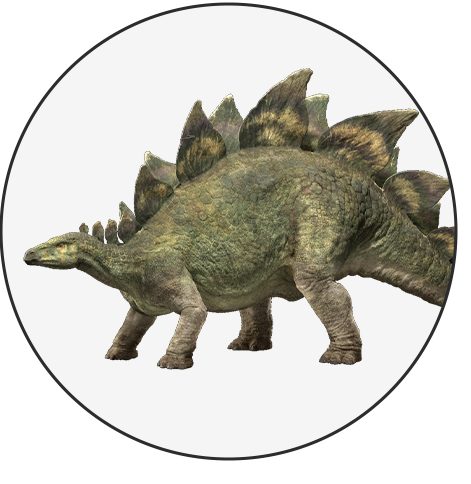
- When did the Stegosaurus live?
The large creature, easily identified by its large back plates, lived in the Late Jurassic period approximately 152-145 million years ago. Stegosaurus shared the planet with other well-known dinosaurs, including the brachiosaurus and diplodocus. At this time, the planet had just been split into two main areas, Gondwana and Laurasia, as the continents we know today began to form. Learn more about life during the Jurassic period in our complete guide to the Mesozoic Era.
- What did the Stegosaurus eat?
Stegosaurus avoided eating other, smaller dinosaurs because it was herbivorous. The stegosaurus mainly fed on low-lying plants and vegetation. It’s believed that ferns and cycads were the most popular menu items as they suited the stegosaurus’ weak jaw. A fun quirk of the stegosaurus diet is that they occasionally ate small rocks! This is believed to have helped digest vegetation in the stomach by breaking up leaves and foliage.
- How big was the Stegosaurus?
At a staggering 4.3 metres tall and 9 metres long, the stegosaurus was longer than a double-decker bus! While something of that stature would be something to stare at with our mouths wide open today, it was simply another creature during the Jurassic. Stegosaurus lived with other, often larger dinosaurs. Luckily, there was plenty of vegetation to keep the large herbivore occupied.
- Why did Stegosaurus have plates on its back?
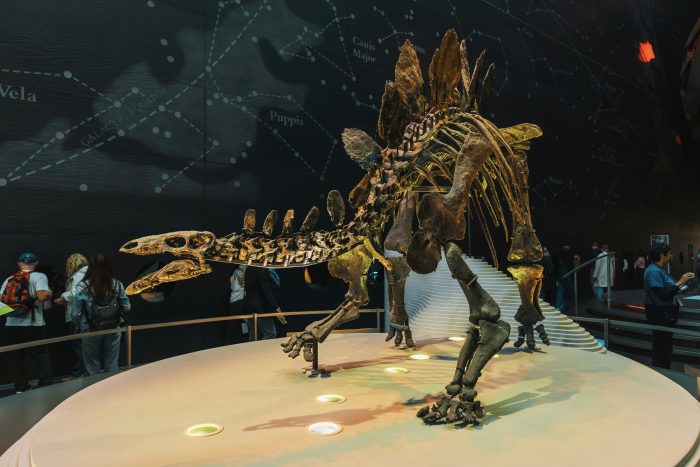
Plenty of incredible research has gone into understanding nearly everything about the stegosaurus since its discovery, but one thing experts are still undecided on is the stegosaurus’s signature plates. The general assumption is that the species evolved the plates to help protect themselves from predators, but the plates’ actual appearance remains contested. Some believe that the plates were laid flat to create armour; however, others suggest they stood upright as spikes. Perhaps once further research is done, we’ll have a definitive answer!
- Was the Stegosaurus fast?
Certainly not. The stegosaurus was an incredibly slow-moving dinosaur that moved around on all fours. Not all legs came the same, though. A stegosaurus’ front two legs were shorter than its rear legs, as they evolved from creatures that used only their back legs to walk. Stegosaurus would’ve certainly preferred a leisurely stroll as opposed to a 100m sprint.
- When was the Stegosaurus discovered?
The stegosaurus was uncovered in an incredibly exciting time for dinosaur fossil discovery. The “Bone Wars” (also known as the “Great Dinosaur Rush”) was a 15-year period during which palaeontologists competed to discover as many fossils as possible. One of these scientists, Othniel Charles Marsh, first described stegosaurus bones found by Arthur Lakes in Colorado, USA, in 1877. Due to the high number of dinosaur discoveries in the state, Colorado actually has an official state dinosaur. And it’s the stegosaurus!
- What does the word Stegosaurus mean?
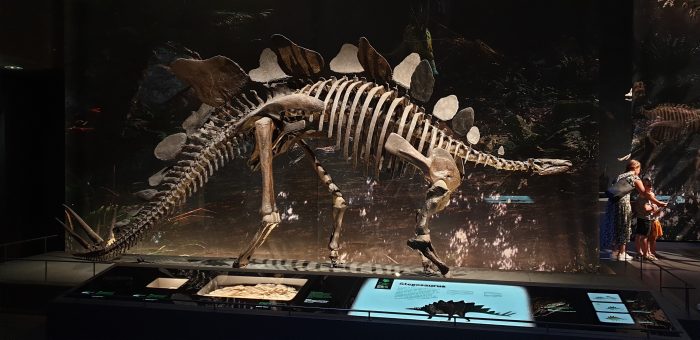
When Marsh described the fossils in 1877, he initially believed that they were from an animal similar to a turtle. He labelled the species as “roof(ed) lizard”, translating to stegosaurus, due to his interpretation of the plates on the animal’s back lying like tiles on a roof.
- Why is the Stegosaurus called the dumbest dinosaur?
There’s a slightly cruel perception that the stegosaurus was far from the smartest dinosaur that walked the earth. This is because the animal had a very small head and a brain that was naturally even smaller. Research suggests that a stegosaurus brain was as small as a plum! Despite this, the stegosaurus got by very well and managed to fend off predators constantly.
- Where did the Stegosaurus live?
Given that the species was discovered in North America, it would be understandable to assume that the stegosaurus was firmly rooted there. However, further discoveries have suggested that direct relatives were present across Europe and Asia, as well as what is now the United States.
- Interesting Stegosaurus myths
The stegosaurus may have more myths surrounding it than any other dinosaur. These range from the slightly logical to the bizarre. For example, some believed that, due to its ancestors, the stegosaurus walked on two legs. We know now that this isn’t the case, but it’s tame in comparison to the suggestion that the stegosaurus had a second brain! Yes, it was once suggested that, given how small the creature’s brain was, it must have had a second. Some put forward the suggestion that it even resided in its lower hip towards its backside. Unfortunately, this was swiftly disproven.
Quiz: How much do you know about stegosauruses?
Ready to show off your new knowledge? Take our interactive quiz and become a stegosaurus expert!
1. What year did stegosaurus fossils first get described?
2. During which period did Stegosaurus live?
3. Which US state is Stegosaurus the official dinosaur of?
4. What did Stegosaurus eat to help with digestion?
5. Where did early naturalists believe Stegosaurus had a second brain?
Browse fascinating dinosaur fossils at Fossils UK
Congratulations! You’re now a certified stegosaurus expert. Celebrate this achievement and expand your knowledge by learning about more dinosaurs at Fossils UK. (Link to other blogs here)
A great way to extend your dinosaur learning is to examine fascinating dinosaur fossils up close. At Fossils UK, we stock an amazing collection of dinosaur fossils that you can display at home or learn from as a piece of history that has lasted millions of years. Start your collection journey with our dinosaur fossils today!
Comments are closed here.