
The Complete Meteor Shower Guide 2025/26
Are grey and cloudy skies feeling all too familiar and mundane? At Fossils UK, we want to give you something to look forward to. Meteor showers are glorious rays of continuous light that brighten the night sky in various fluorescent colours. People camp out for days on end in the hopes of catching a glimpse of a meteor shower, but with our guide, that isn’t necessary.
We’ve compiled a list of the key meteor showers to look out for during the remainder of 2025, as well as bonus 2026 showers to put in your calendar. Learn more about what meteor showers are, where they come from, when to look out for them and the best ways to enjoy them in our complete guide.

Table of contents
- What is a meteor shower?
- Upcoming meteor showers in 2025 & 2026
- Best ways to enjoy meteor showers in the UK
- Learn more about meteoroids, meteors & meteorites at Fossils UK
What is a meteor shower?
A meteor shower is the term used to describe when a significantly large amount of meteoric material is visible on any given night. This material becomes visible after it breaks away from its parent meteoroid, asteroid or comet into smaller pieces that coincide with the Earth’s orbit.
When this happens, the pieces burn up and are practically destroyed by the Earth’s atmosphere. Individual pieces that burn up and transform as they pass through the atmosphere are known as shooting stars. When multiple of these occur simultaneously, that’s when we experience beautiful and vibrant meteor showers.
The meteoric material that survives the battle through the atmosphere and lands on the Earth’s surface is meteorites.
These showers are appointment viewing for many astronomy enthusiasts and those who simply seek enjoyment from fascinating natural wonders. Meteor showers can spark imagination, leave people in awe and provide a sense of enormous well-being all at once.
Upcoming meteor showers in 2025 & 2026
The opportunity to see a meteor shower with your own eyes comes around more often than you think. You also won’t need to travel far and wide, most meteor showers visible from the UK can be enjoyed either from or close to your home.
With help from the official International Meteor Organisation, we’ve compiled a list of the key meteor showers to look out for during the rest of 2025 and the start of 2026. These tables contain terminology that may be unfamiliar to you if you’re just picking up an interest in meteor showers. Below, we’ve provided some key term explanations:
- Maximum Date: When the meteor shower activity peaks.
- Est. Hourly Rate: The estimation of how many meteors you can expect to see under optimum conditions.
Meteor showers 2025
| Shower Name | Duration | Maximum Date | Est. Hourly Rate | Description |
| Alpha Capricornids | 3 July – 15 Aug | 30 July | 5 | Slow yellow fireballs. |
| Delta Aquariids | 12 July – 23 Aug | 30 July | 25 | A moderate shower over several days. |
| Perseids | 17 July – 24 Aug | 12 Aug | 150 | Radiant green meteors that pass quickly, leaving trails. |
| Draconids | 6-10 Oct | 8 Oct | 10 | Debris from comet 21 P/Giacobini-Zinner. |
| Orionids | 2 Oct – 7 Nov | 22 Oct | 15 | A reliable annual shower, believed to come from Orion’s belt. |
| Taurids | Southern: 10 Sep – 20 Nov Northern: 20 Oct – 10 Dec | Southern: 10 Oct Northern: 12 Nov | 5 | Slow and long-lasting shower from the Taurus constellation. |
| Leonids | 6-30 Nov | 17 Nov | 15 | Quick bright meteors with fine trains. |
| Geminids | 4-20 Dec | 14 Dec | 120 | A large number of bright meteors. One of two major meteor showers to not originate from a comet. |
| Ursids | 17-26 Dec | 22 Dec | 10 | A sparse shower. |
Meteor showers 2026
| Shower Name | Duration | Maximum Date | Est. Hourly Rate | Description |
| Quadrantids | 28 Dec – 12 Jan | 3 Jan | 80 | A strong and consistent shower with blue meteors. |
| Ursae Minorids | 10-22 Jan | 18 Jan | 3 | It radiates from the Ursa Minor constellation, AKA Little Dipper. |
| Centaurids | 31 Jan – 20 Feb | 8 Feb | 6 | A minor meteor stream radiating from the southern constellation Centaurus. |
| Lyrids | 14-30 Apr | 22 Apr | 18 | Bright fast meteors associated with Comet Thatcher. |
| Puppids | 15-28 Apr | 24 Apr | >5 | Slow travelling meteors with attractive trails. |
| Aquariids | 19 Apr – 28 May | 6 May | 50 | Low in sky, created by debris from Comet Halley. |
| Dayt. Arietids | 14 May – 24 Jun | 7 Jun | 30 | Most active during daylight hours. |
| Bootids | 22 Jun – 2 Jul | 22 Jun | 1-2 | Very low activity, but prone to dramatic bursts. |
Best ways to enjoy meteor showers in the UK
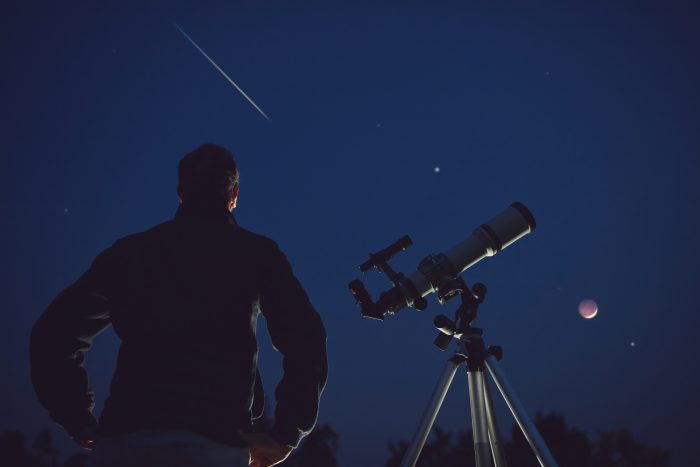
Knowing when to expect a meteor shower is a great starting point, but understanding the best way to set up for them allows you to appreciate their beauty fully. We’ve outlined some key tips to ensure you get the best possible viewing experience for upcoming meteor showers in the UK.
- Plan ahead – The weather can be unpredictable in the UK at the best of times, so it’s important to keep a keen eye on the forecast ahead of a meteor shower to avoid cold and wet conditions.
- Get a clear view – Ensure you reduce the amount of light pollution in your field of view as much as possible. Fields, parks and other areas free from unnatural light will help you get an optimal view of the passing meteors.
- Avoid obstructions – Meteors can appear in any part of the sky, so you’ll need a good range of angles. Pick a spot free from trees or buildings where you can see as much of the sky as possible.
- Stay awake – Plenty of meteor showers are most active late at night or in the early hours of the morning before sunrise. Prepare accordingly and ensure you don’t drift off and miss the showers!
Learn more about meteoroids, meteors & meteorites at Fossils UK
If you’ve got some time before you plan for the next meteor shower, why not learn more about where they come from and what they could’ve become had they survived the atmosphere? At Fossils UK, we stock an incredible collection of meteorites for display and collectors.
Ethically sourced directly from finders, collectors and dig sites, all of our meteorites provide a fascinating insight into the composition of our solar system and how it came to be. Impact craters full of extraterrestrial rocks have provided scientists and geologists with near-endless research capabilities to help us better understand our own universe,
Find a gift for yourself or a loved one with a passion for space in our range of iron and stony meteorites, or indulge in visually pleasing pallasites. Whatever your taste or interests, our meteorite collection has something for you.
Comments are closed here.