
A Guide to 5 of the World’s Most Famous Meteorites
Every so often, a large rock will fight its way through the Earth’s atmosphere and reach the ground. Some don’t make it that far as they burn up, creating shooting stars. However, those that survive and reach the ground are known as meteorites. Although most are hidden away and are never found, some are located, analysed and identified.
Meteorites offer us a fascinating insight into our solar system, making these discoveries incredibly valuable as we learn more about the universe we inhabit. Over the years, there have been a few meteorites that have left a tangible impact, not just where they landed.
These rocks are unique for various reasons. Location, age, size, components and lasting effects all play a role in some of science’s most interesting discoveries. At Fossils UK, we’ve compiled five of the world’s most famous meteorites, detailing how they were discovered and what we’ve learned from them.
Table of contents
- The Winchcombe Meteorite
- The Fukang Meteorite
- The Hoba Meteorite
- The Tunguska Event
- The Allende Meteorite
- Famous meteorite discoveries map
- Discover fascinating meteorites at Fossils UK
| The Winchombe Meteorite | The Fukang Meteorite | The Hoba Meteorite | The Tunguska Event | The Allende Meteorite | |
| Year Found | 2021 | 2000 | 1920 | 1908 | 1969 |
| Location | Winchcombe, Gloucestershire, UK | Fukang, Xinjiang, China | Grootfontein, Namibia | Podkamennaya Tunguska River, Krasnoyarsk Krai, Russia | Pueblito de Allende, Chihuahua, Mexico |
The Winchcombe Meteorite
Late in the evening on 28 February 2021, a fluorescent green fireball flew through the sky over the UK and was captured by meteor camera networks. Following videos and reports, deductions were made that meteorites landed near the Gloucestershire town of Winchcombe. A local family, the Wilcocks, discovered and collected the meteorites from their driveway after initially mistaking them for charcoal from a BBQ.
They realised their initial thoughts were mistaken after seeing news reports about the bright fireball that flew through the Southwest of England. After carefully collecting the meteorite into sealed bags using gloves, the Wilcocks informed the UK Meteor Network of their discovery. The rocks were quickly identified as a meteorite and taken to the national meteorite collection at London’s Natural History Museum.
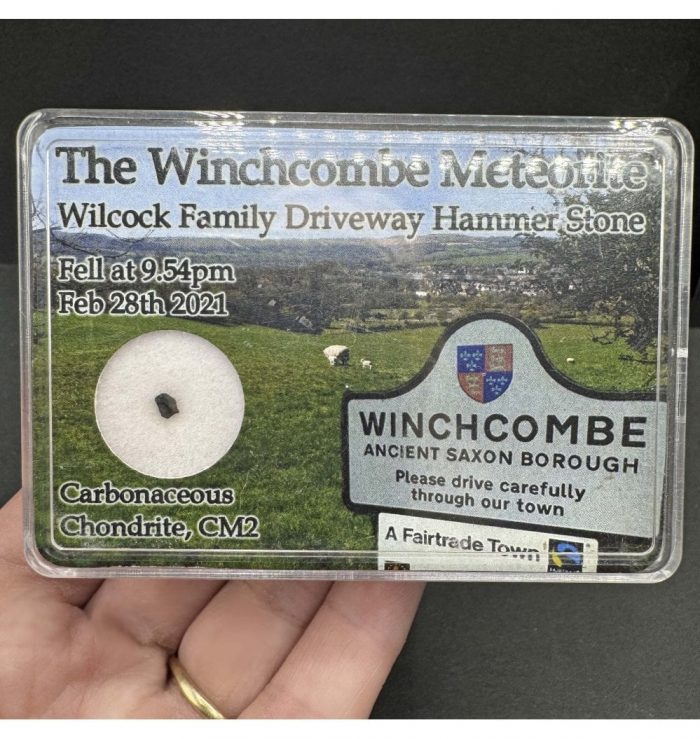
This was the first meteorite fall to occur in the UK in 30 years, sparking excitement and intrigue among British experts. In the following days, scientists from across the country descended upon Winchcombe in search of more meteorites before they became susceptible to the glum British rain and wind.
A second discovery looked unlikely as scientists spent three days trudging through the Gloucestershire fields until Mira Ihasz, a volunteer from the University of Glasgow, found the largest Winchcombe meteorite fragment in a sheep field. Over 600g of the fall has been recovered and is the subject of in-depth research by various teams of experts looking to learn more about our solar system.
The Fukang Meteorite
In 2000, a hiker was walking a familiar trail near the mountains in Fukang, China, when he became drawn to a vibrant rock laced with shimmering yellow crystals. The hiker had passed the rock several times before, but on this occasion, he decided to take a closer look. What he’d discovered was a spectacular stony-iron meteorite known as a pallasite.
Pallasites are meteorites composed of nickel-iron metal that contain fluorescent crystals.
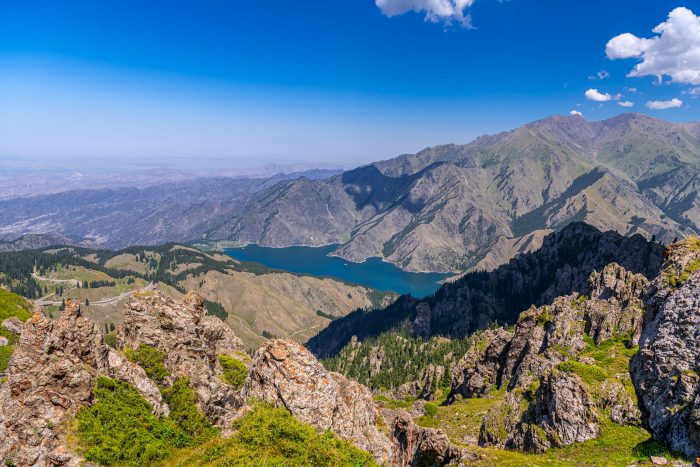

The most visually stunning of all meteorites, pallasites attract wonder and amazement from scientists worldwide and are believed to be up to 4.5 billion years old. A portion of the Fukang pallasite was sent for analysis by the hiker, and in February 2005, it was displayed at the Tucson Gem and Mineral Show.
While on show in Arizona, the Fukang meteorite caught the attention of Dr. Dante Lauretta, a professor of Planetary Science and Cosmochemistry at the state’s university. Lauretta and a team of scientists researched the olivine pallasite.
Auction house Bonhams offered the main mass of the meteorite for auction in Manhattan in April 2008, expecting the Fukang pallasite to fetch around $2,000,000. However, the lot remained unsold. 13 years later, Christie’s, a separate auction house, announced that it had sold a smaller piece of the Fukang meteorite for $30,000.
The Hoba Meteorite
The world’s largest known intact meteorite was discovered over a century ago and has fascinated scientists and experts ever since. In 1920, a farmer named Jacobus Hermanus Brits, in what is now Namibia, was ploughing a field near Grootfontein when his ox was stopped dead in its tracks. A large metallic screeching noise forced Brits to stop and investigate.
When the Brits discovered the large rock, it was excavated, and they identified and described it as a meteorite. It was named the Hoba meteorite after the farm where it was found, Hoba West. The Hoba meteorite measures 2.7m by 2.7m by 0.9m, the largest known intact meteorite in the world, which was declared a national monument of South West Africa in 1955.
The government planned to develop a tourism site dedicated to the Hoba meteorite, but the ‘70s saw major disruption. The meteorite sat in the Otavi triangle, a key arena of the South African Border War that lasted until 1988, resulting in the formation of the independent Republic of Namibia in 1990.

A tourist centre was opened in late 1987, and since the end of the war, thousands of tourists visit the magnificent meteorite each year to marvel at its size. This centre discouraged vandalism; however, sources from previous thefts were still traded. Bonhams listed an unusually large specimen in December 2021 that was illegally harvested in 1968 and sold for just under $60,000.
The Bonhams sale notice says: “The present specimen was obtained in 1968 by the father of the present owner when he visited the main mass of Hoba together with some friends. Using a hand saw, they cut a large block of the meteorite from the main mass ‘as a souvenir’, an activity which took them between three and four hours.”
The Tunguska Event
Despite no physical meteorite ever being recovered from the site, the Tunguska event is still the largest impact event in Earth’s recorded history. In June 1908, an explosion between 3 and 50 megatons occurred near the Podkamennaya Tunguska River in Russia. Eyewitnesses observed an incredibly bright bluish light moving through the sky, leaving a thin trail. Around ten minutes later, a large sound similar to artillery gunfire was heard, accompanied by a shock wave so strong that it broke windows and knocked people off their feet hundreds of kilometres away.
Air waves from the blast were detected across Europe and as far as modern Indonesia. Skies were aglow for the next few days across Asia and Europe, with theories that they were caused by light passing through high-altitude ice particles formed at extremely low temperatures due to the explosion.
Eyewitness accounts suggest that up to three people may have died as a result of the explosion, with others recounting the sudden swell of noise, heat and powerful shock waves. The Soviet government was unable to access the blast area until 1927, when Leonid Kulik led an expedition to research the event.
The Tunguska event is still labelled an impact event, but Kulik and his team were shocked to discover a levelled forest and no impact crater. It’s believed that the explosion took place at an altitude of 5 to 10 kilometres rather than making contact with Earth’s surface. The event has been a source of vigorous debate among experts for decades, as researchers long for a definitive answer to what and how this event occurred, as well as its consequences.

The Allende Meteorite
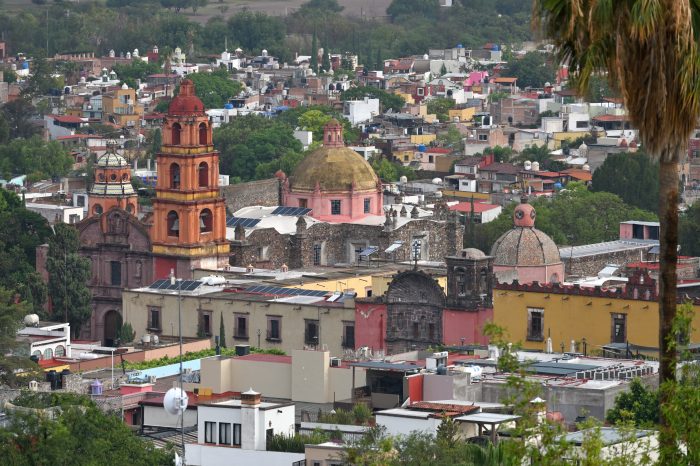
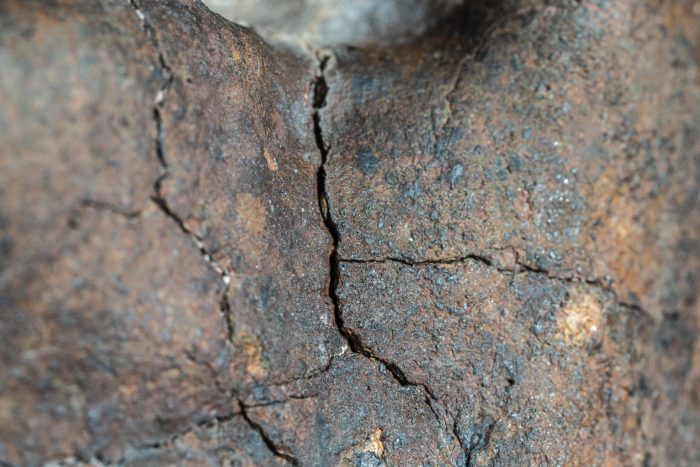
The largest chondrite ever found on Earth fell from space in February 1969 over Chihuahua, Mexico. An extensive search was conducted to locate the meteorite fragments after it broke up in the atmosphere, and over 2 tonnes were recovered, enabling scientists to conduct detailed research and investigations.
The meteorite’s fragments were mainly recovered from the village of Pueblito de Allende and are often referred to as the best-studied meteorite in history, thanks to the sheer volume of recovered fragments. Over 25 years, new pieces of the Allende were discovered and reported to relevant researchers and institutions.
Another reason why Allende is so widely studied is timing. The fall took place in 1969, shortly before the Apollo program was set to return the first moon rocks to Earth. Excitement was high among planetary scientists, and the news of this fall only furthered interest from those within the field.
With new laboratories and research facilities being opened left and right, awaiting the first specimens from Apollo, scientists were well equipped by the time of the fall and were eager to examine anything they could. They found that Allende’s parent meteorite came together during the early stages of the solar system’s formation, as it was estimated to comprise two tonnes of solid rock and dust.
Famous meteorite discovery points
Learn more about the locations of all of these fascinating meteorite discoveries with our interactive map below.
Discover fascinating meteorites at Fossils UK
At Fossils UK, we stock a tremendous collection of meteorites for display and collectors. Our range features extensive iron and stony meteorites that will make the perfect addition to any new or existing extra-terrestrial collection. If you’ve got a friend or family member who is interested in meteorites, choose from our Lunar and Mars meteorites range for a thoughtful and unique gift.
While the meteorites we’ve discussed today are some of the most famous to be discovered so far, there is plenty of time for new phenomena to grace us with their presence from the stars. Stay up to date with upcoming meteor showers to witness geological history as it unfolds with our comprehensive guide.
Comments are closed here.