
The Chicxulub Crater: The Ultimate Guide to the Asteroid That Ended the Dinosaurs
The history of our planet is written in stone, but some chapters are punctuated by more violent events than others. Of all the milestones in Earth’s 4.5 billion-year timeline, none is more dramatic or definitive than the moment the Mesozoic Era came to a crashing halt. The primary evidence for this global cataclysm lies buried beneath the sediments of the Gulf of Mexico: the Chicxulub crater.
This gargantuan scar serves as the ever-living proof of the mass extinction event that wiped out the non-avian dinosaurs and paved the way for the rise of mammals. At Fossils UK, we believe that understanding the end of the dinosaurs is essential for any serious collector or prehistoric enthusiast. In this guide, we will explore the immense scale of the asteroid, the detective work required to find its impact site, and the hauntingly different world it destroyed.

TL;DR
- The Culprit: An asteroid measuring 10 to 15 kilometres wide (roughly the size of Mount Everest).
- The Impact: Struck the Yucatán Peninsula 66 million years ago with the force of billions of atomic bombs.
- The Evidence: A 150-kilometre-wide crater buried under the Gulf of Mexico, identified by high levels of rare iridium.
- The Consequence: Triggered a global mass extinction, ending the reign of the dinosaurs and 75% of all species.
- Can you see it? Not with the naked eye. It is buried under a kilometre of sediment, though its outline is traced by Mexico’s famous cenotes (sinkholes).
Table of contents
- How big was the asteroid that killed the dinosaurs?
- The Chicxulub crater discovery and subsequent research
- What did the Earth look like when the asteroid hit?
- Is the Chicxulub crater visible?
- Learn more about the prehistoric world at Fossils UK
How big was the asteroid that killed the dinosaurs?
Once asteroids enter the Earth’s atmosphere, any surviving fragments become known as meteorites. The widely accepted theory that a large asteroid caused the demise of the dinosaurs was only brought forward as recently as the late 1970s. American father-son duo Luis and Walter Alvarez led a research group that made a fascinating discovery.
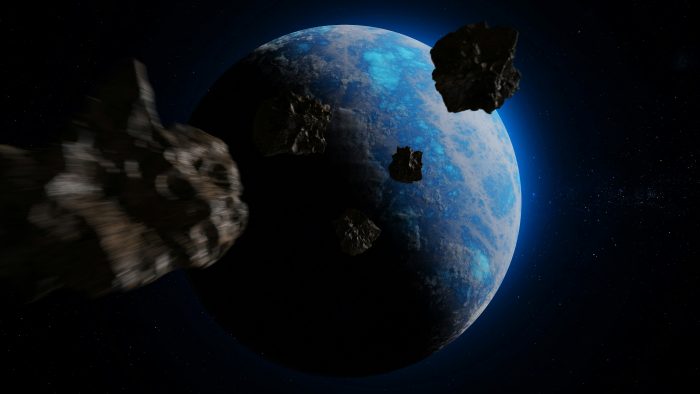
Their research on rock samples from 65 million years ago found extraordinary levels of iridium, a rare element on Earth but prevalent in certain asteroids and comets. Further digging led to their hypothesis that the iridium-rich layer of dust was the aftermath of a large asteroid that vaporised upon impact with Earth.
The asteroid that caused this iridium dust to be so present in the atmosphere and is thought to have wiped out the dinosaurs is thought to have been between 10 and 15 kilometres wide. However, the force of its collision with the Earth created a monumental cavity. A 150-kilometre crater, the second largest on the planet.
The Chicxulub crater discovery and subsequent research
This large dent in the Earth’s surface, created by the deadly asteroid, is known as the Chicxulub crater. Centred on the Yucatán Peninsula in Mexico, rocks from this site are where the Alvarezes and their team made their iridium-based discovery. Another decade would pass until definitive evidence of the site being an impact crater would come.
In 1978, geophysicist Glen Penfield was working to find locations for potential oil drilling in Mexico, and his findings led him to believe that the Chicxulub crater was indeed an impact crater. His employers initially rejected his theory, and Penfield wouldn’t receive his vindication until 1990.
A University of Arizona graduate student, Alan R. Hildebrand, was also investigating the crater. Hildebrand and Penfield would come into contact and begin further research with the help of a California-based team. Once enough evidence was available, the pair and others published their paper identifying the crater in 1991.
Penfield later said part of the reason to name the crater after the nearby town was to cause a pronunciation issue for those who rejected his findings in the past.
What did the Earth look like when the asteroid hit?
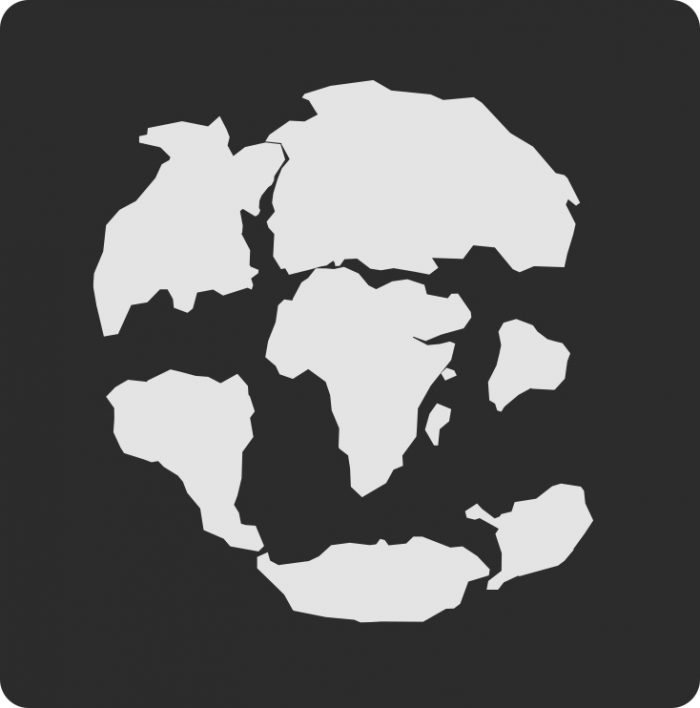
Visualising the planet at the end of the Cretaceous Period requires us to look past the modern map. During this time, the supercontinent Pangea had already been fracturing for millions of years. The Atlantic Ocean was much narrower than it is today, and India was still an island, slowly moving toward Asia. While the continents were drifting into familiar positions, the world’s aesthetic remained alien.
The climate was significantly warmer and more humid than it is today. Lush, subtropical forests stretched toward the poles, and there were no permanent ice caps at either end of the globe. Sea levels were much higher, meaning that vast portions of what we now call Europe and North America were submerged under shallow inland seas.
Giant reptiles dominated these oceans, while the land was a tapestry of flowering plants, towering conifers, and the final generation of iconic dinosaurs like Triceratops and Tyrannosaurus rex.
To fully appreciate this period’s dynamic environment, you can explore a more detailed look at the changing landscapes and biology of this time in our complete retrospective of the Mesozoic Era.
Is the Chicxulub crater visible?
One of the most remarkable things about a structure 150 kilometres wide is that you cannot actually see it. If you were to fly over the Yucatán Peninsula today, you would see a flat landscape of tropical jungle and limestone, not a gaping bowl in the earth.
There are several geological reasons for this invisibility. Firstly, the impact occurred in a shallow marine environment. Over the 66 million years since the event, the crater has been buried under nearly a kilometre of younger sedimentary rock. Nature has effectively filled in the hole and smoothed over the surface.
However, the crater does leave subtle clues. Scientists have used gravity anomalies and seismic surveys to map the underground ring structure. On the surface, the most famous indicators are the “cenotes” or natural sinkholes of Mexico.
These stunning blue pools form a distinctive semi-circular ring that traces the edge of the buried crater wall. These features occur because the impact fractured the underlying limestone, making it more prone to erosion and collapse in those specific areas.
Learn more about the prehistoric world at Fossils UK
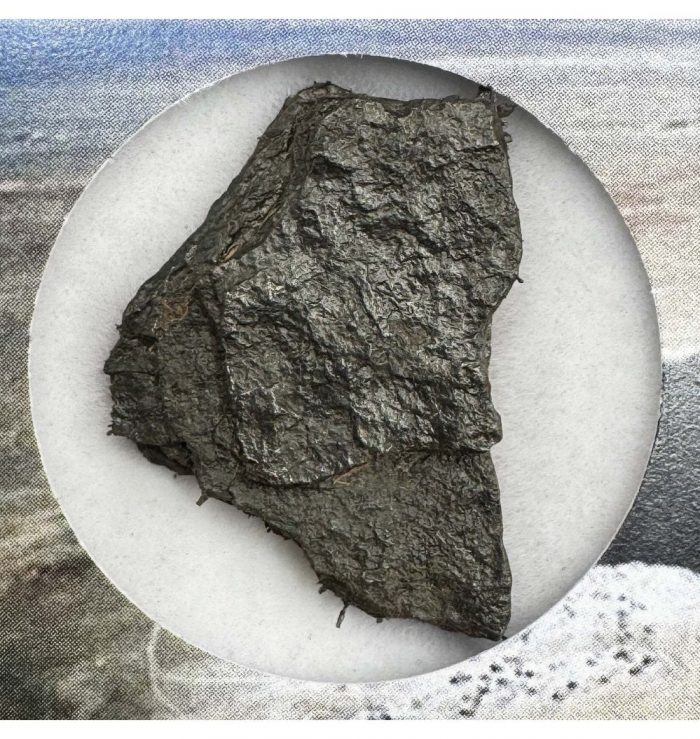
The Chicxulub crater is more than just a geological curiosity. It represents the ultimate turning point in the history of life. At Fossils UK, we are proud to serve as a bridge between this ancient history and the modern enthusiast. Whether you are looking for deep-dive educational resources or hoping to hold a piece of the past in your hands, we are here to guide your journey.
Our expertise allows us to curate a world-class selection of specimens for serious collectors and curious beginners alike. We invite you to explore the many stories of our planet’s past on the Fossils UK blog to further your knowledge of the natural world.
Are you ready to start or grow your own collection? Browse our full range of authentic Dinosaur Fossils and own a genuine relic from the age of the giants.
Comments are closed here.