
Meet the Dinosaurs: A Deep Dive Into Underrated Prehistoric Animals
The prehistoric world of dinosaurs is fascinating for historians, palaeontologists, researchers and film buffs alike! Taking a step back and attempting to comprehend the incredible range of species that once called our planet home can be truly staggering. Creatures of all shapes and sizes that would be unimaginable today roamed the Earth together in harmony and conflict.
At Fossils UK, we’ve always imagined what it would be like to experience life alongside these magnificent animals. Well, from a safe distance in most cases. We’re acutely aware that the desire to develop a deeper understanding of the wonders that came before our time is not unique to us, which is why we’ve put together a guide on a select group of fascinating dinosaurs so we can learn incredible information about fascinating dinosaurs featured in the acclaimed BBC series ‘Walking With Dinosaurs’.
Find out more information about the Walking With Dinosaurs series here.
Read our guide to learn amazing facts and feel like you’re beside some of the most extraordinary beings our planet has ever seen.
Table of contents
- Triceratops – The plant-eating giant
- Spinosaurus – A behemoth to rival the Tyrannosaurs
- Gastonia – Armed, but was it dangerous?
- Albertosaurus – The T-Rex’s forgotten cousin
- Pachyrhinosaurus – A migration phenomenon
- Lusotitan – Hugely under the radar
- Dinosaur fossils at Fossils UK
Triceratops – The plant-eating giant

How to say Triceratops
Pronunciation: trai-seh-ruh-tops.
One of the largest herbivores to roam prehistoric land, the Triceratops is instantly recognisable to anybody with a passing knowledge of dinosaurs thanks to its distinctive horns, beak and large frill. Despite sticking to a plant-based diet, the Triceratops was still an intimidating figure. The vast horns upon its head helped fend off predators and protect against other threats.
What did Triceratops eat?
The Triceratops’ sharp beak helped easily remove vegetation from nearby plants and trees with several rows of rear teeth that took care of any tough material. The Triceratops likely fed upon low-hanging vegetation, but higher plants could’ve been accessible as the herbivorous giant could lift its head.
How big were Triceratops?
Triceratops could reach a remarkable 6 metres (20 feet) in height and 37 metres (121 feet) in length, placing them among the largest dinosaurs to have roamed the planet. Learn more about the largest dinosaurs to ever exist in our in-depth article.
When were Triceratops first discovered?
American scientist Othniel Charles Marsh was the first to discover Triceratops remains in 1887, as he found a pair of horn cores, the inner part of the horns. These cores were made of keratin, similar to human fingernails, which suggests they could regrow and become sharp. Although Marsh initially thought he’d discovered bison remains, further revelations helped him conclude that they belonged to a three-horned dinosaur, which he named Triceratops.
Triceratops fossils
We stock an incredible collection of triceratops fossils at Fossils UK with fascinating teeth, frill fragments and bones available to purchase. Perfect for collectors or as a gift for a dino-obsessed loved one, these beautiful fossils help transport us millions of years into the past alongside these wonderful creatures.

Spinosaurus –A behemoth to rival the Tyrannosaurs

How to say Spinosaurus
Pronunciation: spai-nuh-saw-ruhs.
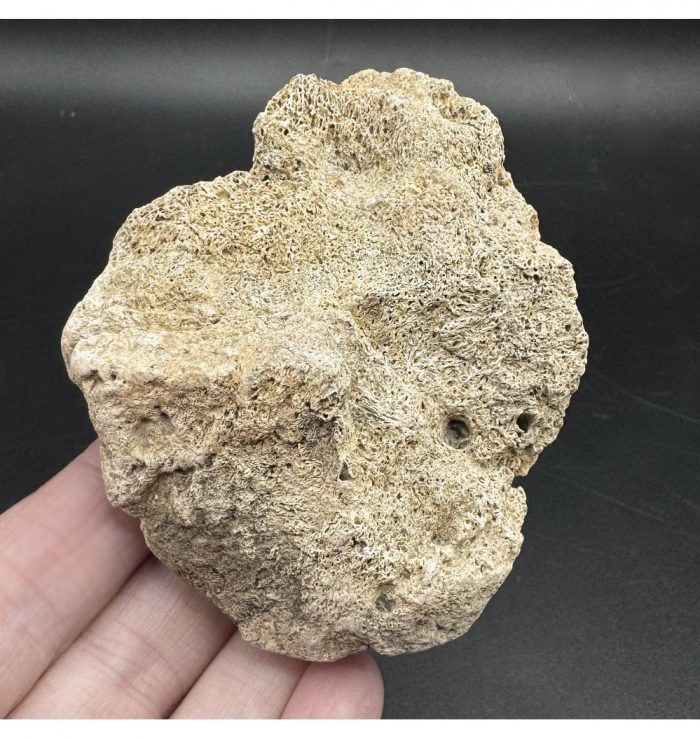
From somewhat of a big, friendly giant to a much less benevolent creature, the Spinosaurus dominated areas of land and water thanks to its semi-aquatic lifestyle. The large theropod made its home in what is now North Africa, specifically in the Kem Kem Beds of Morocco and areas of Egypt.
What did Spinosarus eat?
These deadly predators split their time between land and sea, with the shape of their jaws indicating that they primarily fed on fish. There is speculation that they also fed on other, smaller dinosaurs, but their narrow snout and distinctive jaw notch would be ideal for trapping fish.
Was the Spinosaurus bigger than the T-Rex?
Based on measurements available to fossil records and researchers, the Spinosaurus, at 15 metres long (49 feet), is the largest carnivorous dinosaur known to science, longer than the T-Rex. However, the Tyrannosaurus is taller than Spinosaurus due to the latter’s low hinds.
When was Spinosaurus first discovered?
The story of the gap between the initial discovery and eventual naming of the Spinosaurus fascinatingly overlaps natural and recent human history. In 1915, German palaeontologist Ernst Stromer described initial findings in Egypt three years prior. However, these remains were destroyed during a British bombing of Munich during the Second World War.
Several detailed drawings survived and served as the basis of ongoing research into the species throughout the remainder of the 20th and beginning of the 21st centuries.
Spinosaurus fossils
Explore more fascinating information about the prehistoric world’s largest carnivore and get up close and personal with Spinosaurus fossils in our extensive collection.


Gastonia – Armed, but was it dangerous?
How to say Gastonia
Pronunciation: guh-stow-nee-uh.
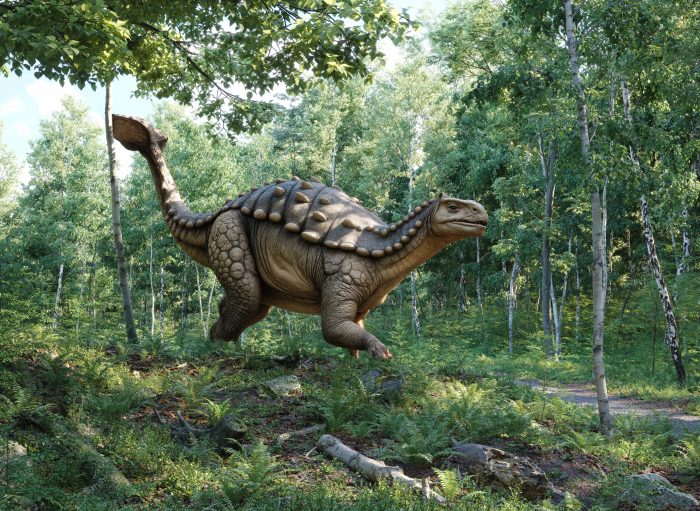
Belonging to the ankylosaur family, the Gastonia was one of the most distinctive armoured dinosaurs to occupy the vast Utah desert. The species was prevalent in the Early Cretaceous period and was formally named by American geologist James Kirkland in 1998 based on recovered material from 1989 onwards. Learn more about the dinosaurs of the Cretaceous in our article detailing the complete history of the Mesozoic Era.
How big was Gastonia?
The Gastonia was a medium-sized ankylosaur with a length of approximately 6 metres (20 feet walking on all fours and weighing at a substantial 1.9 tonnes (4,200 lbs). Gastonia’s unique features included the large spikes on its back and shoulders and its broad rump.
What did Gastonia eat?
Gastonia’s diet was primarily made up of low-lying plants, shrubs and small trees. A herbivorous dinosaur, Gastonia required plants close to the ground due to its relatively short stature.
What was the predator of the Gastonia dinosaur?
The large spikes acted as a visual and physical deterrent for the Gastonia to fend off predators, mainly the dangerously large Utahraptors. Named after their location, the large dromaeosaurid was the apex predator of the area and was the same size as today’s grizzly bears.
How did armoured dinosaurs survive in groups?
While exact social behaviours and collaboration between several ankylosaur species are debated, some evidence suggests that groups were formed for mutual benefit against local predators. Fossil trackways and environmental factors show that herding was possible between Gastonia and similar dinosaurs.
Albertosaurus – The T-Rex’s forgotten cousin
How to say Albertosaurus
Pronunciation: al-buh-tuh-saw-ruhs
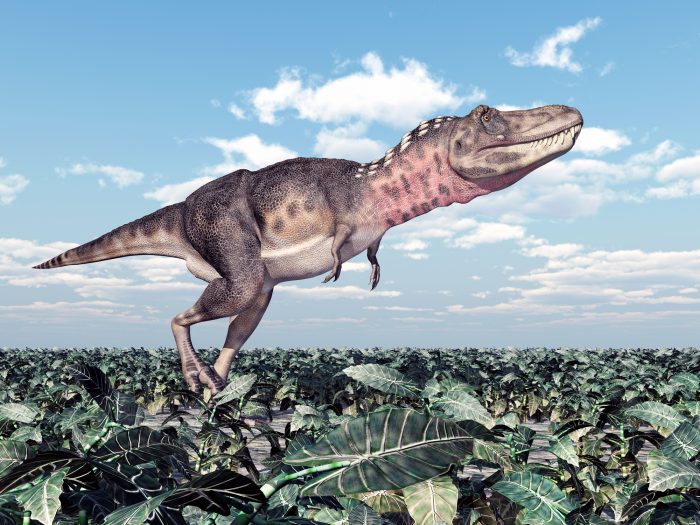
A close relative of the infamous Tyrannosaurus, Albertosaurus was a slightly smaller and much more nimble predator that lived during the Late Cretaceous period, around 71 million years ago. A vast array of Albertosaurus fossils have been recovered since the initial discovery in 1884, providing researchers with detailed knowledge of its anatomy and behaviours.
How big was the Albertosaurus?
Due to its relation and strikingly similar resemblance to the Tyrannosaurus, it’s easy to assume that the Albertosaurus was of a comparable size. However, the theropod was much smaller than its movie star cousin, growing up to 9 metres (30 feet) in length. Certainly not a small creature, but slightly shorter than expectations suggest.
Did Albertosaurus hunt in packs?
These dangerous carnivores likely fed on smaller, plant-eating dinosaurs and based on the fossil records, Albertosaurus appeared to have coordinated their approach to finding meals. Over 30 individual Albertosarus have been discovered, making it one of the best-known and studied species, with 20 recovered from the same site. This suggests that Albertosaurus hunted in packs, making survival almost impossible for their prey.
Where did Albertosarus live?
The Albertosaurus is named after the modern location of its discovery. Alberta, Canada, was home to Albertosaurus, with the first discovery of a partial skill taking place alongside the Red Deer River in 1884. The T-Rex relative was officially named by Henry Fairfield Osborn in 1905.
Pachyrhinosaurus – A migration phenomenon
How to say Pachyrhinosaurus
Pronunciation: pah-kee-ry-noh-saw-ruhs.
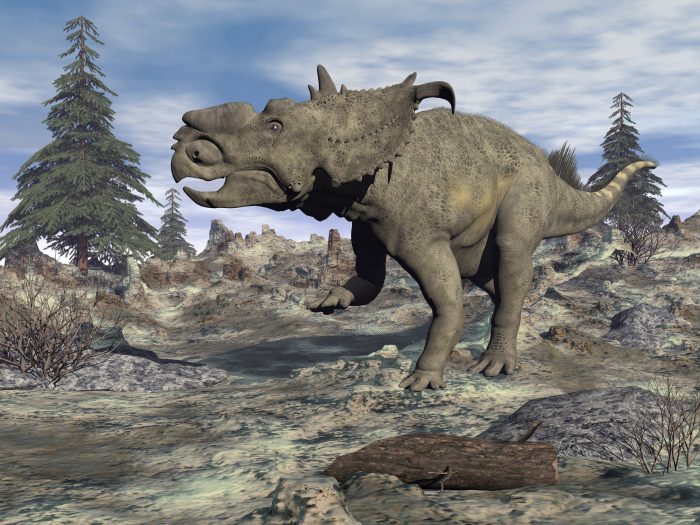
Discovered by Charles Sternberg in Alberta, Canada 1946, and named just four years later, the Pachyrhinosaurus was a ceratopsid with a fascinating history. Living during the Late Cretaceous, this unique dinosaur’s journey across North America has spurred excited discussion surrounding migration patterns among experts and scientists for decades.
Where did Pachyrhinosaurus live?
Today you might not picture Alberta as a hot climate with several coast points and forests, but that’s how the area was defined approximately 70 million years ago. Pachyrhinosaurus also lived in Alaska, USA. Now famous for its icy exterior, Alaska was warmer in the Late Cretaceous but still featured periods of cold and darkness.
Did Pachyrhinosaurus travel in herds?
Mass migration is always a topic that grabs the attention of researchers and scientists when analysing dinosaurs and their behaviour. Pipestone Creek in Alberta has become a hub for Pachyrhinosaurus discoveries and has often been described as a mass grave site for the species. The abundance of fossils in these concentrated areas suggests that the creatures were migrating in herds from the south to the north for the summer, caring for their young along the way.
Why did Pachyrhinosaurus have unique frills?
The key element that stands out in the Pachyrhinosaurus’ appearance is the unique frill behind the head. Scientists suggest this frill could have been used for species recognition, competition between male creatures or as a deterrent to any potential predators.
Lusotitan –Hugely under the radar
How to say Lusotitan
Pronunciation: lu-so-tie-tan
Turning our attention from North American treks to the prehistoric lands of Portugal to assess the life and behaviours of the Lusotitan. Closely associated with, and regularly mistaken for by scientists, a Brachiosaurus, Lusotitan was a large sauropod that was only officially recognised as recently as 2003. Named after Lusitania, the Roman name for the empire’s region that contained Portugal.
How tall was the Lusotitan?
Lusotitan reached staggering lengths of an estimated 21 metres (69 feet). This figure is only an approximation, as a full skeleton has never been recovered. Much about the dinosaur’s neck is still unknown, so until new information comes to light, we won’t be able to confirm an official length.
Did the Lusotitan have any predators?
The biggest threat a fellow dinosaur posed to the Lusotitan was the Torvosaurus, meaning savage lizard. A large theropod, the Torvosaurus hunted sauropods and other large herbivores by slowly stalking them across rivers and forests. Living during the Jurassic, a major challenge the Lusotitan faced was rapidly changing climates and seasons.
How did sauropods attract mates?
Competition wasn’t just rife between Lusotitan and its predators, but with fellow dinosaurs of the same species. Researchers suggest that male Lusotitans often engaged in physical contests with one another for the prize of a mate. The tall creatures also may have used loud grumblings to attract females.
Dinosaur fossils at Fossils UK
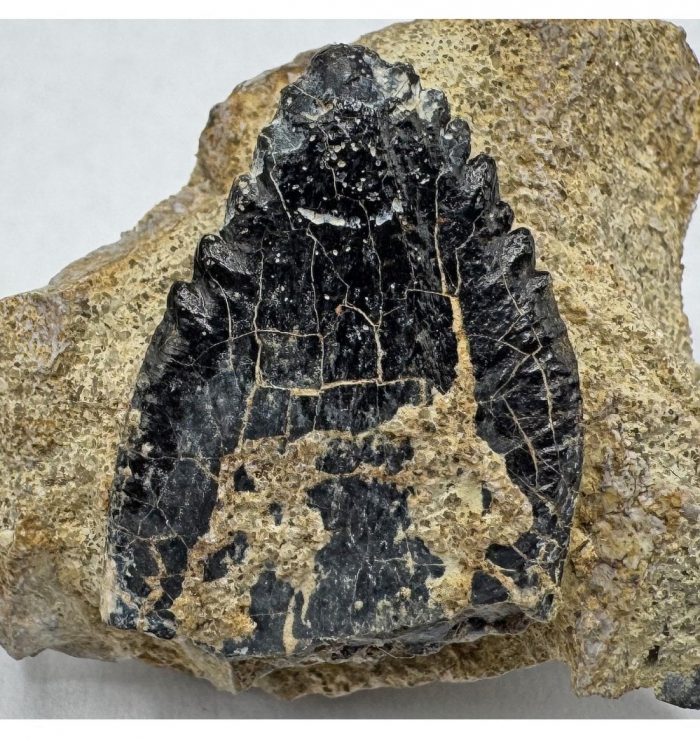
At Fossils UK, we have a deep admiration and passion for all things dinosaurs. We take great pride in sharing our knowledge and hobby with other enthusiasts and introducing new community members to our work and the wonderful history of the prehistoric.Browse our stunning collection of dinosaur fossils, including claws, teeth, bones, and so much more. Learn about these staggering creatures’ lives, habitats and characteristics and feel like you’re travelling through time to experience the prehistoric with them. Choose Fossils UK for a reliable and knowledgeable service for all your fossil needs.
Related posts
- What were the first dinosaurs fossils found?
- The largest dinosaurs ever discovered
- Prehistoric Periods: What was the Mesozoic Era?
Comments are closed here.